Why You Should Choose a Tower Crane Mobile for Your Construction Needs
In the ever-evolving landscape of construction, the choice of equipment can significantly influence project efficiency and success. Among the myriad options, the "Tower Crane Mobile" stands out as a versatile solution tailored to meet the demands of modern construction sites. As industry expert Robert Lang, a renowned construction engineer, aptly states, "A Tower Crane Mobile offers unparalleled flexibility, allowing projects to adapt to changing requirements without compromising on safety and productivity."
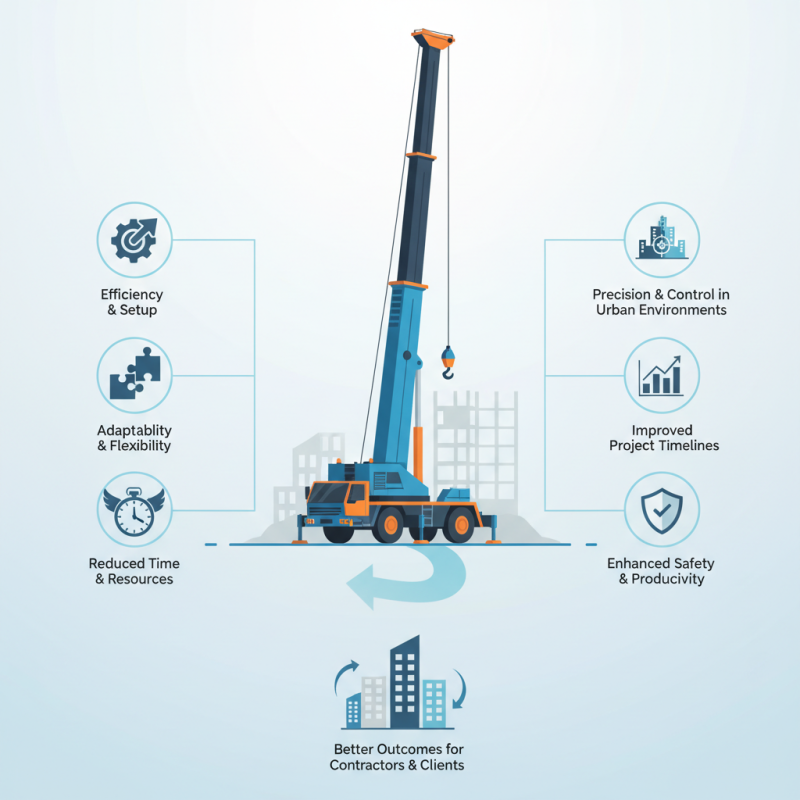
The mobility of these cranes not only enhances their operational capacity but also reduces the time and resources typically required for setup and relocation. This adaptability is crucial as construction projects often face unpredictable challenges, requiring prompt adjustments to labor and equipment. By integrating a Tower Crane Mobile into their operations, stakeholders can ensure a streamlined workflow and maintain a competitive edge.
Furthermore, the advanced technology embedded in modern Tower Crane Mobiles allows for enhanced precision and control, making them indispensable in urban environments where space is limited. Embracing this innovative equipment can lead to significant improvements in project timelines and overall site efficiency, ultimately driving better outcomes for both contractors and clients.
Advantages of Tower Crane Mobile in Modern Construction Projects
The modern construction landscape is increasingly favoring mobile tower cranes due to their numerous advantages. One of the most notable benefits is their flexibility and mobility, allowing them to adapt to various site conditions and project requirements. This adaptability is crucial for urban construction projects, where space may be limited and the ability to reposition equipment quickly becomes a significant advantage.
According to industry reports, the global tower crane rental market was valued at USD 16.3 billion in 2024, with projections to reach USD 22.1 billion by 2030, reflecting a compound annual growth rate (CAGR) of 5.2%. This growth indicates a rising demand for efficient and versatile equipment, such as mobile tower cranes, which can lift heavy loads with precision and safety. Additionally, the ability of these cranes to reach considerable heights while maintaining stability has made them indispensable for large-scale projects needing intensive lifting capabilities.
Incorporating mobile tower cranes into construction planning can lead to improved timelines and reduced labor costs, as these machines streamline operations and minimize downtime. Their capability to operate in various terrains and urban environments makes them a favored choice for contractors aiming to enhance productivity and efficiency in their operations.
Key Features That Enhance Efficiency in Tower Crane Mobile Solutions
When considering tower crane mobile solutions for construction needs, certain key features significantly enhance operational efficiency.
One of the primary advantages is their versatility.
Unlike traditional stationary cranes, mobile tower cranes can be repositioned with ease, allowing for optimal use of space and reducing downtime between tasks.
This adaptability ensures that projects can progress smoothly, even in complex environments where layout or logistical challenges may arise.
Another essential feature is the advanced technology integrated into modern tower crane mobiles.
Many models now include smart control systems that facilitate real-time monitoring of load weights, weather conditions, and operational status.
This technology not only boosts safety but also enables more efficient workflows by ensuring that cranes operate within their optimal performance parameters.
Additionally, these cranes often come equipped with automated functions, such as self-leveling capabilities and remote operability,
which enhance usability and reduce the potential for human error.
Embracing these innovations can significantly improve productivity on construction sites, making tower cranes an indispensable asset for modern construction projects.
Comparative Analysis: Tower Crane Mobile vs. Traditional Crane Systems
When comparing tower crane mobile systems with traditional crane systems, several advantages become apparent, especially in the context of modern construction practices. Tower cranes, recognized for their ability to lift heavy loads vertically and efficiently, have seen significant advancements recently. Notably, the integration of autonomous operations allows these "steel giants" to navigate construction sites with minimal human intervention, enhancing safety and operational efficiency. A recent report highlights that the growth of the tower crane market is linked to the stability of the construction industry, projecting a continued upward trend as automation technologies become more prevalent.
Moreover, the use of mobile tower cranes enables greater flexibility on construction sites. Traditional cranes often require extensive setup and dismantling, making them less adaptable to changing project demands. In contrast, mobile tower cranes can be relocated swiftly, reducing downtime and enhancing productivity. Research shows that companies employing advanced construction technologies, including mobile tower cranes, can achieve up to a 30% increase in efficiency, as they are able to streamline workflows and reduce labor costs associated with manual lifting operations. Thus, the evolution towards more intelligent and mobile crane systems is vital for maintaining competitiveness in the evolving construction landscape.
Why You Should Choose a Tower Crane Mobile for Your Construction Needs
| Feature |
Tower Crane Mobile |
Traditional Crane Systems |
| Mobility |
High - easily transportable |
Low - fixed location |
| Setup Time |
Quick setup |
Longer setup time |
| Load Capacity |
Medium - suitable for most construction tasks |
High - often higher capacity |
| Versatility |
High - can be used in various environments |
Moderate - limited to specific setups |
| Cost |
Lower operational costs |
Higher maintenance and operational costs |
| Safety Features |
Advanced safety systems |
Standard safety features |
Industry Data: Impact of Tower Crane Mobile on Project Timelines
The impact of mobile tower cranes on construction project timelines cannot be overstated. According to industry projections, the tower crane rental market is set to reach an impressive USD 22.1 billion by 2030. This growth is indicative of the increasing demand for efficient and flexible lifting solutions in various construction projects. Mobile tower cranes enhance productivity by allowing for swift setup and repositioning, which significantly reduces idle time on-site.
Moreover, the ability to adapt quickly to changing project requirements with a mobile crane can lead to substantial time savings. Reports highlight that projects utilizing mobile tower cranes can improve their completion rates by up to 30%, demonstrating their pivotal role in modern construction. As the industry continues to evolve, embracing advanced equipment like mobile tower cranes is essential for contractors aiming to stay competitive and meet tight deadlines while maintaining high safety standards.
Impact of Tower Crane Mobile on Project Timelines
The chart above illustrates the average project duration in days before and after the implementation of tower crane mobile technology. As shown, the average project duration decreased significantly from 120 days to 80 days, highlighting the efficiency gains achieved through this advanced construction equipment.
Cost-Effectiveness: Evaluating Budget Benefits of Tower Crane Mobile Usage
When evaluating the budget benefits of incorporating a
tower crane mobile into your construction projects, the cost-effectiveness of this equipment becomes apparent.
According to the Global Tower Crane Market report by Research
and Markets, the tower crane market is expected to grow at a CAGR of over 5% from 2021 to 2026.
This growth indicates a rising recognition of the efficiency that tower crane mobiles provide, particularly in
terms of reduced labor costs and improved safety.
By minimizing manual handling and maximizing load efficiency, project managers can save up to
30% on labor expenses, making this an attractive
investment for large-scale construction initiatives.
Tips for optimizing cost savings include selecting the
right model that aligns with your project specifications. A mobile tower crane can navigate tight urban spaces,
reducing transportation and setup time significantly. Additionally, consider rental options instead of
outright purchases; studies indicate that renting can save construction companies approximately
25-40% on costs when factoring in
maintenance and repair requirements. Investing in a mobile tower crane can streamline operations and deliver
substantial long-term savings, making it a smart choice for modern construction needs.