Leave Your Message

10 Tower Cranes Pictures and Buying Tips

Tower cranes shape busy construction sites, rising above concrete cores, steel decks, and temporary access roads. These 10 Tower Cranes Pictures offer a closer look at crane types, mast sections, jibs, counterweights, and cab layouts. Small visual differences can matter. A climbing frame, for example, may indicate how a crane gains height as a building grows. The pictures can help readers recognize common configurations before comparing equipment for a project.

Images are useful, but they cannot confirm a crane’s service history, capacity, or present condition. A polished finish proves little. Check the manufacturer’s specifications, load charts, rated capacity, operating radius, and available maintenance records. Consider the site too: ground conditions, building height, power supply, access, and local weather all affect crane selection. Ask qualified suppliers to verify that a proposed model fits the actual lift plan. Look closely. A photo may hide wear on ropes, connections, or structural members, and camera angles can make equipment appear larger or better maintained than it is. Buying decisions deserve more than a good-looking image. Use the pictures as a starting point, then confirm details with documentation and an on-site inspection. Some comparisons will remain uncertain until those checks are complete. That is worth admitting.

10 Tower Cranes Pictures and Buying Tips

What Is a Tower Crane and How Does It Work?

A tower crane is a fixed, tall lifting machine designed to move heavy materials across a construction site. Its steel mast supports a rotating unit, a long jib, and a shorter counter-jib. A hoist raises or lowers the hook, while a trolley carries the load along the jib. The crane can also slew, or rotate, to reach different parts of the site. Small movements matter.

Counterweights help balance the crane, but they do not make every load safe. Rated capacity changes with the load’s distance from the mast: a load farther out usually means less lifting capacity. Operators use load charts and follow site-specific procedures. OSHA’s 29 CFR 1926.1435 sets requirements for tower-crane assembly, disassembly, and operation. Conditions such as wind, ground support, and nearby structures also affect safe use. Real sites are rarely as tidy as diagrams suggest.

CPWR’s report “Crane-Related Deaths in Construction, 2011–2017” recorded 297 construction crane-related deaths in the United States, about 42 per year. The figures cover all crane types, not tower cranes alone. They underline why trained crews, inspections, clear communication, and careful load planning matter.

Common Tower Crane Types and Their Uses

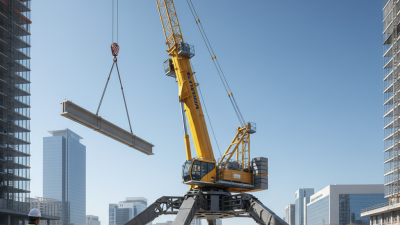
Tower cranes differ in how their jibs handle space, reach, and changing loads. A hammerhead crane has a horizontal jib and trolley, making it useful on open sites where several work zones need coverage. Its trolley can move a load along the jib, but the required working radius must be checked against the load chart. Capacity usually falls as the hook moves farther from the mast. That detail is easy to underestimate.

A luffing-jib crane raises and lowers its jib, so it suits dense city sites with nearby buildings or several cranes operating close together. The smaller slewing radius can reduce clashes, though its setup and operation demand careful planning. Flat-top cranes are often chosen for multi-crane projects because their jibs can be arranged with less tower-top interference. Self-erecting cranes serve smaller projects, such as low-rise housing, where quick setup matters more than great height or reach. On site, access for delivery and ground bearing strength can rule out a crane before lifting capacity does.

The 2024 Global Status Report for Buildings and Construction, by UNEP and GlobalABC, estimates that the sector used 32% of global energy and produced 34% of energy-related CO2 emissions in 2023. Those figures do not measure crane performance, but they support checking lift plans, idle time, and power needs when comparing options. Not every project needs the largest crane. Measure the heaviest load, its pick-and-place radius, mast height, and available ground support before choosing a type. My own caution: drawings can look roomy until the truck arrives.

Common Tower Crane Types: Typical Maximum Rated Load

Self-erecting cranes are often used on smaller sites, while hammerhead, flat-top, and luffing-jib cranes are common on larger construction projects. The ranges shown are indicative examples in metric tonnes, not standardized limits; actual capacities depend on the crane model, configuration, and working radius.

Key Components, Capacity, and Safety Features

A tower crane’s capacity is not one fixed number. It changes with load radius, jib configuration, mast height, and tie-in arrangement. Read the load chart for the exact setup, then compare the planned lift with the rated capacity at that radius. A close-up photo of the chart, load-moment limiter, and serial plate can help buyers spot missing or unreadable information. Small details matter.

Inspect the main components: mast sections, slewing unit, trolley, hoist, wire rope, and counterweights. Look for cracked welds, damaged rope strands, loose bolts, and signs of poor alignment. Ask for maintenance records and documented inspections, not just polished pictures. Capacity figures need context. A crane rated for a heavy load near the mast may lift far less at the jib tip.

Safety features deserve the same scrutiny. Check for working overload protection, limit switches, anemometer, clear operator visibility, and suitable anti-collision systems when cranes overlap. OSHA’s construction-crane rule, 29 CFR 1926.1435, sets specific requirements for tower cranes. The U.S. Bureau of Labor Statistics reported 1,075 fatal work injuries in the construction and extraction occupational group in 2023; this figure is not crane-specific, but it underscores the cost of weak controls. A tidy inspection sheet can still miss a real problem. Verify the equipment on site.

10 Tower Crane Pictures and Buying Tips: Key Components, Capacity, and Safety Features

Use this comparison as a visual planning guide when reviewing tower crane configurations. Capacity ranges are indicative examples only: actual ratings depend on the crane model, jib length, configuration, and site conditions. Always verify the manufacturer’s load chart and approved operating documentation.

No. Picture / Configuration Illustrative Maximum Rated Load Illustrative Load Near Jib Tip Key Components to Inspect Safety Features to Confirm Buying Tip
1 Hammerhead tower crane with horizontal jib 6–25 t 0.8–3 t Mast sections, slewing unit, counter-jib, trolley, hoist rope, and hook block Rated-capacity limiter, hoist limit, trolley travel limit, and anemometer Compare the load chart at the required working radius, not only the crane’s maximum rated load.
2 Flat-top tower crane for compact assembly 6–20 t 0.8–2.5 t Jib connections, mast joints, slewing ring, trolley system, and electrical cables Overload protection, emergency stop, motion limits, and clear operator visibility Check whether the assembly method and lifting equipment suit the site’s available space and access.
3 Luffing-jib tower crane for restricted sites 8–32 t 1–4 t Luffing mechanism, hoist and luffing ropes, jib pins, mast, and counterweights Jib-angle limit, rated-capacity limiter, wind monitoring, and anti-collision system where needed Confirm the jib can operate within nearby airspace and building-clearance restrictions.
4 Self-erecting tower crane for low-rise projects 1–10 t 0.5–2 t Folding mast and jib, hydraulic cylinders, chassis, outriggers, and stabilizers Outrigger monitoring, hydraulic safety valves, load limiter, and emergency-stop controls Check transport dimensions, setup requirements, ground-bearing capacity, and the load chart at full reach.
5 Internal-climbing tower crane in a building core 6–25 t 0.8–3 t Climbing frame, hydraulic system, support beams, mast ties, and climbing shoes Climbing sequence interlocks, hydraulic pressure monitoring, and secure support verification Review the climbing plan, floor-support design, opening dimensions, and coordination with the structural engineer.
6 External-climbing tower crane attached to a structure 6–25 t 0.8–3 t Mast ties, tie frames, anchor points, mast sections, and climbing equipment Wind-speed monitoring, tie inspection records, overload protection, and travel limits Confirm tie spacing and building attachment details against the engineered design and installation manual.
7 Topless tower crane used in a multi-crane layout 6–20 t 0.8–2.5 t Jib chords, connection pins, slewing assembly, trolley, and mast bracing Anti-collision and zoning systems, rated-capacity limiter, and communication equipment Map jib paths and working zones to reduce overlap and check that anti-collision equipment is compatible.
8 Rail-mounted tower crane for linear projects 6–20 t 0.8–2.5 t Rail bogies, travel motors, rail clamps, buffers, mast, and power supply Rail travel limit switches, storm anchors, rail clamps, and wind alarms Assess track foundation, drainage, rail alignment, travel limits, and the required storm-parking arrangement.
9 Tower crane with a short-jib configuration 8–25 t 1.5–4 t Jib sections, trolley, hoist drive, counter-jib, and counterweights Load-moment limiter, hoist upper limit, trolley limit, and wind monitoring A shorter jib may improve capacity at reach, but verify that it still covers every required pick-and-place point.
10 High-rise tower crane with multiple mast ties 8–32 t 1–4 t Mast sections, climbing frame, tie frames, slewing unit, and hoist system Load limiter, wind-speed alarm, inspection access, emergency lowering procedure, and anti-collision system as required Evaluate hook height, tie locations, climbing stages, power supply, maintenance access, and the full project lift plan.

Capacity reminder: The load at the jib tip is generally lower than the maximum rated load. Obtain the load chart for the exact crane configuration and confirm foundation design, wind limits, installation, inspection, and operator requirements with qualified professionals.

10 Tower Crane Pictures and What to Look For

A useful set of ten tower crane pictures should show more than the full machine against the skyline. Look for a wide view of the crane, then closer images of the mast sections, foundation, climbing frame, and building ties. Include the jib, counter-jib, counterweights, trolley, hook block, and operator’s cab. Each view answers a different question.

Small details matter.

Check whether mast joints appear aligned and whether visible ties connect cleanly to the structure. In the foundation image, look for the crane’s support arrangement and any signs of standing water or damaged concrete. The jib should look straight, with no obvious distortion; the hook and ropes should be clearly visible, not hidden by glare.

A close-up of the cab can reveal visibility and access conditions. Still, a photograph cannot confirm a crane’s load capacity, maintenance history, or safe operating status. Shadows can make sound parts look bent, and a polished image may hide wear.

Use captions, dates, and technical documents alongside pictures, and ask a qualified inspector about concerns.

One detail may be misleading.

How to Choose and Buy the Right Tower Crane

Choosing the right tower crane starts with the work, not the tallest figure on a specification sheet. Map the heaviest load, its lifting radius, and the highest placement point. A 6-ton load near the mast may be manageable, while a lighter load far across the site may exceed capacity. Check the load chart at the exact radius you expect to use. Small differences matter.

Next, compare the crane’s foundation and tie-in requirements with the site’s soil, available space, and construction schedule. Measure nearby structures, delivery access, and room for assembly. Consider wind exposure, power supply, operator visibility, and how the crane will be dismantled. Looks simple. It isn’t. A suitable model on paper may still be a poor fit if installation disrupts the worksite or the schedule leaves little room for delays.

Before buying, request inspection and maintenance records, especially for a used crane. Have a qualified crane professional assess structural components, wire ropes, brakes, and controls. Confirm that parts, technical support, and trained operators can be arranged when needed. Compare the full cost, including transport, assembly, inspections, maintenance, and removal—not just the purchase price. A specification can look reassuring, yet hide practical compromises; I would still verify every assumption against the actual site plan.