Top Tower Crane Jobs Tips for Global Buyers?
In today's construction landscape, finding the right Tower Crane Jobs is essential for global buyers. Tower cranes play a crucial role in large projects. However, navigating the job market can be challenging. Expertise in this area is vital for success. Buyers should understand the varying demands across regions. It's not just about selecting the right equipment.
Global buyers often face uncertainty. Different countries have unique regulations and project needs. Knowledge of these factors can enhance decision-making. Insights from experienced professionals can provide valuable perspectives. However, relying solely on past success can be misleading. Continuous learning is necessary in this field.
Furthermore, effective communication with suppliers is key. Establishing trust helps in securing favorable terms. Documenting everything is important to avoid misunderstandings. Buyers must reflect on their choices and adapt strategies. Embracing this mindset fosters growth and better outcomes.

Top 10 Factors Influencing Tower Crane Selection for Projects
Selecting the right tower crane for a project involves multiple considerations.
First, evaluate the site conditions. Different sites pose various challenges, affecting crane performance.
Terrain, soil type, and proximity to buildings matter.
For example, a sloped site may limit crane positioning options.
Another factor is the load capacity. Each project has unique lifting requirements.
Understanding the maximum weight your crane will handle helps in making an informed choice.
Oversized loads might require cranes with higher capacities, ensuring safety and efficiency.
Remember, underestimating load requirements often leads to costly delays.
Also consider the crane's reach and height. The height of your structures plays a crucial role.
Ensure the crane can reach all necessary heights without compromising stability.
Take into account surrounding structures when assessing reach.
Reflect on your project's future needs, as scalability is essential.
Tips:
Maintain communication with suppliers to keep up with innovations. Sometimes, new technologies can provide unexpected advantages.
Review operational costs, as hidden expenses can impact your budget.
Planning for unexpected issues enhances project reliability.
Always have a backup plan for crane failure, as delays can be costly.
Assessing these factors carefully contributes to a successful project outcome.
Understanding Load Capacity Ratings of Tower Cranes in Construction
Understanding load capacity ratings of tower cranes is crucial for any construction project. Tower cranes are typically rated by their maximum lifting capacity, which can range from 5 tons to over 20 tons. According to industry reports, the average load capacity for most medium-sized cranes is around 10 tons. This rating determines not only what materials can be lifted but also how the crane operates on-site.
Construction managers must consider various factors when evaluating load capacity. Wind conditions, crane height, and the type of materials can all affect a crane's performance. It's noteworthy that as cranes grow taller, their load capacity may differ. For instance, a crane that lifts 10 tons at a height of 50 meters may only safely lift 8 tons at 75 meters. Each construction site presents unique challenges, and understanding these limits is vital.
Safety measures are also essential to prevent accidents. An estimated 24% of crane-related incidents occur due to overloading. This statistic highlights the importance of adhering strictly to the rated capacities. Regular inspections and maintenance help ensure that all cranes function optimally. Inadequate attention to load ratings can lead to severe consequences, not just for the project timeline but also for worker safety.
Load Capacity Ratings of Tower Cranes in Construction
Comparative Analysis of Tower Crane Types and Their Efficiency
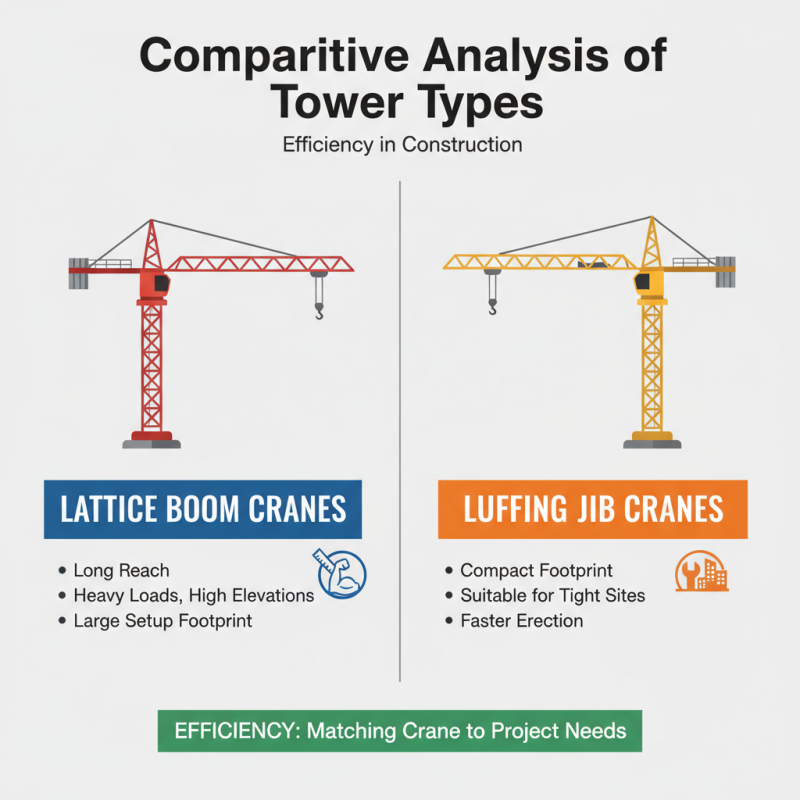
When considering tower crane types, efficiency plays a crucial role in construction projects. Lattice boom cranes are exemplary for long reaches. They can lift heavier loads at high elevations. However, their setup requires a larger footprint. This aspect might not always suit smaller job sites.
On the other hand, the tower cranes with a solid mast can be more compact. They are versatile and easy to assemble. These cranes often have a quicker setup time, making them favored in urban constructions. Yet, their lifting capacity may be limited compared to lattice boom models.
Purchasing a tower crane requires a careful examination of the project's specific needs. Buyers should weigh factors like load capacity and reach. Understanding the limitations of each crane type can prevent costly mistakes. As buyers navigate the options, keeping an eye on operational efficiency will always pay off in the long run.
Global Trends in Tower Crane Procurement and Market Demand
The tower crane market has been evolving rapidly, influenced by various global trends. The demand for tower cranes is closely tied to the growth of the construction sector. According to a recent report by Markets and Markets, the global tower crane market is expected to reach USD 5.2 billion by 2025, growing at a CAGR of 4.7%. This growth is driven by increased urbanization and infrastructure developments in emerging economies.
Furthermore, the need for efficiency in construction processes cannot be overstated. Many companies are investing in advanced technology solutions to improve crane operations. For instance, real-time monitoring systems enhance performance and safety. Yet, procurement processes can be complex and often hinder projects. A survey revealed that 30% of procurement professionals consider delays in supply chains a significant challenge.
While the global demand remains strong, issues related to quality and suitability need attention. Buyers must assess local regulations, site conditions, and specific project requirements. In many cases, companies overlook these factors, leading to suboptimal equipment selections. Ensuring compliance with safety standards is critical. Without due diligence, potential risks increase, impacting project timelines and costs.
Essential Safety Regulations and Compliance for Tower Crane Operations
Tower crane operations require strict adherence to safety regulations. Operators must understand local compliance requirements. Knowing these regulations mitigates risks during projects.
Regular inspections are crucial. Check the crane daily before use. Ensure all emergency mechanisms function properly. Training should include identifying potential hazards. Workers must be aware of their surroundings.
Tips for operators: Maintain clear communication with the team. Use hand signals when necessary. Avoid operating in high winds. Each job site is unique. Be ready to adapt to changing conditions. Stay vigilant. Regularly review safety protocols. A proactive approach minimizes accidents.
Top Tower Crane Jobs Tips for Global Buyers? - Essential Safety Regulations and Compliance for Tower Crane Operations
| Aspect |
Guidelines |
Compliance Importance |
Recommended Actions |
| Operator Training |
Ensure all operators have completed certified training programs. |
Critical for preventing accidents and ensuring safe operations. |
Regularly update training programs and certifications. |
| Pre-Operation Inspections |
Conduct thorough inspections before each use. |
Essential to identify any mechanical issues early. |
Maintain an inspection checklist and log findings. |
| Safety Gear |
All personnel must wear appropriate safety gear. |
Protects workers from potential accidents. |
Regularly inspect and replace safety gear as needed. |
| Load Limits |
Strictly adhere to load limit specifications. |
Failure to comply can lead to catastrophic failures. |
Clearly mark load limits on the crane. |
| Emergency Protocols |
Establish and communicate clear emergency procedures. |
Ensures quick and efficient response in emergencies. |
Conduct regular drills to practice emergency response. |