What Is a Mobile Tower Crane and How Does It Work?
A Tower Crane Mobile combines the lifting height of a tower crane with the movement of a mobile carrier. It can travel between sites, position itself near changing work zones, and support construction where fixed foundations are impractical. Yet mobility does not mean simplicity. Every lift still depends on ground conditions, setup accuracy, wind limits, and load control.
“Safety should be a core value, not just a priority,” says Dr. David Michaels, former Assistant Secretary of Labor for Occupational Safety and Health. His warning applies directly to Tower Crane Mobile operations. A trained crew must inspect the carrier, mast sections, slewing system, counterweights, and lifting accessories before work begins. Small details matter. A poorly supported outrigger can change the machine’s stability within seconds.
This guide explains what a mobile tower crane is and how its main systems work together. The carrier provides transportation and basic positioning. Outriggers create a stable working platform. The telescopic or folding tower raises the working height, while the jib reaches across the site. Hydraulic systems, electric drives, sensors, and operator controls coordinate the movement.
The process looks smooth from a distance. It is not always smooth in practice. Tight access, uneven soil, overhead structures, and sudden weather changes can complicate a planned lift. Engineers may calculate the load correctly, yet site conditions can still challenge those assumptions. Understanding the machine helps readers ask better questions, identify weak points, and use reliable procedures instead of trusting appearances.
Definition and Main Features of a Mobile Tower Crane
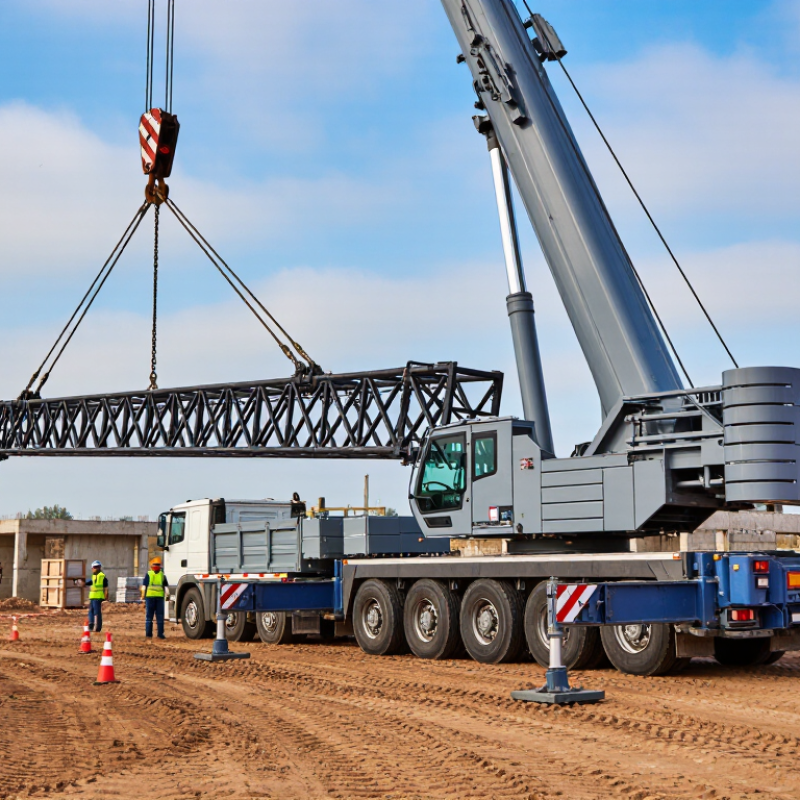
A mobile tower crane is a lifting machine mounted on a wheeled or crawler carrier. It combines the reach of a tower crane with the mobility of transport equipment. Unlike a fixed tower crane, it can move between prepared work areas. This makes it useful for bridge projects, industrial sites, and large building work.
Its main features include a telescopic mast, a horizontal jib, a hoisting mechanism, and a counterweight system. The mast provides vertical height, while the jib moves loads across the working radius. Hydraulic systems often help level the crane and extend its sections. The operator follows load charts, which show safe capacity at different distances. A heavy load near the jib tip can reduce capacity sharply. Small setup errors matter.
In practical inspections, ground condition is one of the first concerns. Soft soil, hidden voids, or uneven surfaces can affect stability. Wind also changes how the jib behaves, especially at greater heights. The crane must be assembled, operated, and checked by qualified personnel under an approved site plan. No machine is perfectly forgiving. Even experienced teams can miss a detail during a busy shift.
Tips: Check the ground before positioning the crane. Confirm the load weight and lifting radius. Inspect pins, ropes, brakes, and hydraulic lines daily. Keep people outside the marked lifting zone. Record unusual movement or noise instead of ignoring it.
Key Components and Their Functions
A mobile tower crane combines tower-crane height with roadable mobility.
Its carrier supports the chassis, axles, hydraulic outriggers, and counterweights. Outriggers spread the load across the ground, while the slew ring rotates the upper structure. The telescopic mast then rises hydraulically, creating vertical reach without fixed foundations. A horizontal jib carries the trolley, hoist rope, hook, and load. Control systems monitor wind, rated capacity, boom position, and overload risks. It is modular, but not simple.
During lifting, the hoist motor raises the load, and the trolley adjusts its distance from the mast. The operator must read the load chart, confirm ground bearing capacity, and coordinate signals with the lifting team. The 2024 Global Crane Market report by Grand View Research estimates continued market growth through 2030, reflecting demand for flexible lifting equipment. Yet market growth does not guarantee safe practice. The ILO’s construction safety guidance stresses planning, competent supervision, inspection, and worker communication. Those basics still fail when schedules become aggressive.
Tips:
Inspect wire ropes, hooks, brakes, pins, and limit switches before each shift. Check outrigger pads for sinking, especially after rain. Keep people outside the falling-object zone. Never treat a sensor as a substitute for judgment. UNEP’s 2024 Global Status Report links buildings and construction to about 32% of global energy use, so efficient crane positioning also matters. In my experience, the overlooked detail is often the ground, not the crane. Recheck it.
Step-by-Step Process of Lifting and Moving Loads
A mobile tower crane combines a tower crane’s height with a vehicle-mounted base. It can travel between sites and lift materials over obstacles. Its work begins with a ground check. The crew confirms soil strength, working radius, wind conditions, and the load chart. Outriggers or stabilizers then extend firmly. The tower is assembled, leveled, and inspected before lifting starts.
The operator receives the load weight and destination from the lifting supervisor. Slings or approved lifting accessories are attached around the load, with sharp edges protected. A signaler checks the connection and clears nearby workers. The hook rises slowly, keeping the load close to the ground for a short test lift. If it stays balanced, the operator hoists higher, slews the crane, and moves the load across the planned path. The load is lowered gently onto prepared supports. No sudden movement.
In real work, small planning errors matter. A load may swing when wind changes, or the ground may settle under one stabilizer. Experienced crews still pause and reassess. Communication must remain clear through radios or agreed hand signals. A missed signal can become a serious problem.
Tips:
Keep people outside the lifting zone. Check the load’s center of gravity before lifting. Use slow controls near the landing point. Recheck weather conditions during long operations. If anything feels uncertain, stop the lift and inspect the setup again.
Safety Systems, Operating Limits, and Common Applications
A mobile tower crane combines a tower crane’s height with a roadable chassis. It travels to site, then stabilizes on outriggers or prepared supports. A hydraulic system raises the tower and jib. The operator controls lifting, slewing, trolley travel, and hoisting from the cabin or remote station.
Safety systems include load-moment indicators, rated-capacity limiters, emergency stops, anemometers, slew brakes, and anti-two-block devices. These systems do not make poor planning safe. The crane’s load chart changes with radius, jib angle, counterweight, and setup configuration. Wind limits also vary by manufacturer and jib arrangement. Exceeding them can create dangerous oscillation. HSE’s Fatal Injuries in the Workplace, Great Britain, 2023/24 reported 51 construction-worker deaths. The figure covers all construction activities, but it shows why lifting control cannot be treated casually.
Tips: Verify ground bearing capacity before deployment. Check buried services, overhead lines, exclusion zones, and outrigger extension. Keep a visible load chart at the controls. Stop lifting when wind approaches the stated limit. A tidy setup can still conceal weak ground or an incorrect radius calculation. That is the uncomfortable part.
These cranes suit urban housing, schools, warehouses, and restricted sites. They reduce assembly time compared with larger conventional tower cranes. However, transport width, road access, foundation conditions, and nearby structures may limit their use. A competent person should inspect the crane before each shift and after significant movement, weather, or configuration changes. Records matter. Memory is not a control measure.
What Is a Mobile Tower Crane and How Does It Work?
A mobile tower crane combines a tower crane’s vertical reach with a mobile carrier. Its lifting ability is governed by the load moment, which is the lifted load multiplied by the horizontal radius.
Operating principle: This normalized model assumes a constant allowable load moment. As the working radius increases, the theoretical lifting capacity decreases in inverse proportion to the radius. Actual capacity must always be taken from the crane’s manufacturer-approved load chart and setup configuration.
- Safety systems: load-moment indicators, rated-capacity limiters, anti-two-block devices, emergency stops, slew limits, and wind-speed monitoring.
- Operating limits: rated load, working radius, boom or jib configuration, counterweight, ground conditions, outrigger setup, wind speed, and transport or road regulations.
- Common applications: building construction, urban renovation, precast installation, plant maintenance, infrastructure work, and sites where a conventional fixed tower crane is impractical.