Leave Your Message

How to Choose Tower Crane Parts for Global Sourcing?

Choosing Tower Crane Parts for global sourcing requires more than comparing prices on a supplier’s website. A brake disc, slewing ring, or hydraulic valve may look similar, yet small differences can affect lifting stability, maintenance time, and operator safety. Buyers need verified dimensions, material information, load ratings, and compatibility with the crane’s model. One wrong measurement can delay an entire project.

Experienced sourcing teams begin with the crane’s service records, parts drawings, and operating environment. Coastal sites may require stronger corrosion protection. Dusty construction zones can demand better sealing and more frequent inspection. Ask suppliers for batch numbers, inspection reports, quality certificates, and clear product photographs. Factory audits and sample testing add confidence. They also reveal practical details, such as poor packaging or inconsistent labeling.

Reliable global sourcing depends on communication after the purchase. Confirm lead times, spare-part availability, warranty terms, and technical support before placing a large order. Check whether the supplier understands export documentation and destination requirements. A low unit price means little if customs delays stop a tower crane for three weeks. No sourcing plan is flawless. Specifications may be incomplete, and supplier claims may need independent verification. That is why a staged order often works better than immediate bulk purchasing. This guide explains how to compare Tower Crane Parts, evaluate suppliers, reduce avoidable risks, and build a purchasing process that remains dependable under real construction pressure.
How to Choose Tower Crane Parts for Global Sourcing?

Understanding Tower Crane Parts and Their Functions

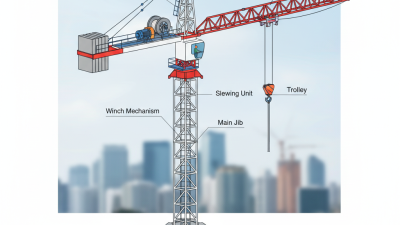
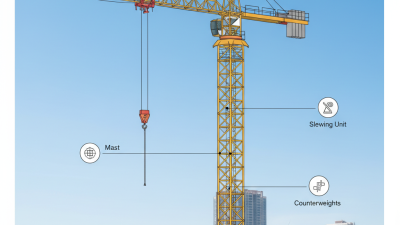
Tower crane parts work as a connected system, not as isolated pieces. The mast sections carry vertical loads and maintain the crane’s height. The slewing unit rotates the upper structure around its axis. The jib controls the working radius, while the trolley moves the load along the jib. The hoist motor, wire rope, and hook create the lifting movement. Small parts matter too.

During inspections, I pay close attention to pins, bolts, sheaves, brakes, and limit switches. A worn sheave can damage the wire rope quickly. A weak brake may allow unwanted load movement. Limit switches help prevent over-hoisting and trolley travel beyond safe positions. Operators also depend on accurate load moment indicators. These devices show whether the crane is approaching its rated capacity. Their readings should never replace proper judgment.

Global sourcing requires matching every part to the crane’s configuration. Buyers should verify dimensions, material grades, load ratings, connection methods, and technical drawings. A mast section with the right appearance may still have an incorrect flange pattern. Check certificates, inspection records, packaging strength, and corrosion protection before shipment. Confirm electrical specifications for the destination site. Regional standards can differ, and translated documents sometimes lose important details. I have seen teams approve parts from photographs alone. That approach is convenient, but unreliable. Better records reduce mistakes, although no checklist catches everything. Human review remains necessary.
Identifying Project Requirements and Crane Compatibility

Choosing tower crane parts for global sourcing starts with the project, not the catalog. Define maximum load, lifting radius, working height, duty cycle, and site conditions. A coastal project may require stronger corrosion protection, while a cold site demands suitable seals and lubricants. Fit is not enough.

Match every component with the crane’s technical data. Check model series, connection dimensions, load charts, electrical voltage, control signals, and operating limits. Compare the part’s material grade and rated capacity with the original specification. For critical components, request inspection reports, batch numbers, installation instructions, and traceable test records. These documents help confirm reliability across borders and simplify technical reviews.

I have seen teams select a compatible-looking limit switch, only to discover different wiring during installation. That delay was avoidable. Verify drawings and connector layouts before ordering. Measure twice. Ask the supplier to confirm compatibility in writing, especially for brakes, hoist motors, slewing systems, pins, and safety devices. Local service conditions also matter; dust, humidity, transport damage, and limited maintenance skills can change the practical choice. A less expensive part may become costly after downtime, expedited freight, or repeated fitting attempts. My own sourcing checks have improved over time, but I still allow room for uncertainty when older crane records are incomplete.

Evaluating Quality, Standards, and Supplier Reliability

When sourcing tower crane parts globally, quality must be verified beyond appearance.

Inspect slewing rings, wire ropes, brakes, limit switches, and structural bolts against approved technical drawings.

Request material certificates, dimensional reports, and load-test records.

Evidence matters.

Each document should match the part number, batch, and production date.

International projects often involve different safety requirements. Check relevant ISO or EN references, local regulations, and site-specific engineering rules before purchasing.

A qualified engineer or independent inspection body can review calculations and test results.

Ask how the supplier controls heat treatment, welding, corrosion protection, and final assembly.

Small details matter. A poorly sealed connector may fail after months of dust and rain.

Supplier reliability is measured through repeatable behavior, not promises.

Review factory capacity, quality procedures, traceability systems, and previous export experience.

Request a sample inspection before approving a larger order.

Confirm packaging for sea transport, spare-part availability, delivery schedules, and technical support across time zones.

I have learned that fast replies do not always indicate strong production control.

Some suppliers provide excellent certificates but weak corrective actions.

That gap deserves attention.

Keep written records of deviations, inspection results, and agreed remedies. A practical sourcing decision should balance compliance, verified performance, communication, and the supplier’s willingness to admit problems.

Comparing Costs, Logistics, and Global Sourcing Risks

How to Choose Tower Crane Parts for Global Sourcing?

Global sourcing tower crane parts requires more than comparing unit prices. A low-cost gear, brake, or wire rope may become expensive after freight, customs processing, inspection, and storage. I have seen purchasing teams focus on the quotation while ignoring a six-week lead time. That delay can stop assembly work and increase site labor costs. Request a complete landed-cost calculation. Include packaging, insurance, inland transport, taxes, and payment fees. Confirm technical dimensions, material grades, load ratings, and compatibility with existing equipment. Small differences matter.

Logistics risks deserve equal attention. Heavy components need strong crates, moisture protection, and clear lifting points. Ask suppliers for packing photos, shipping measurements, and realistic production schedules. Keep critical spare parts near the project when possible. Sea freight is usually cheaper, but urgent air transport can erase the savings quickly. Supplier reliability is harder to measure. Review inspection records, traceability documents, replacement procedures, and responses to technical questions. Independent inspection may add cost, but it can prevent costly rework. I would not trust a perfect promise without evidence.

Tips: Compare at least three landed-cost quotations, not only product prices. Use a checklist for dimensions, certificates, packaging, delivery dates, and warranty terms. Plan a small trial order before committing to large volumes. Keep records. That habit exposes weak assumptions early. One lesson remains uncomfortable: the cheapest option is often attractive because the risks are hidden.

How to Choose Tower Crane Parts for Global Sourcing? — Comparing Costs, Logistics, and Global Sourcing Risks
Indicative planning benchmarks for international sourcing. Prices exclude taxes, certification fees, tooling, installation, insurance, and destination charges; actual values vary by capacity, dimensions, material grade, order quantity, destination, and required documentation.
Part Category Typical Specification or Material Indicative Unit Cost (USD) Typical Shipment Weight Indicative Production Lead Time Common International Freight Mode Logistics Sensitivity Global Sourcing Risk Risk Score
(1–5)
Recommended Sourcing Approach Key Quality Checks Before Shipment
Mast Section Welded structural steel frame; hot-dip galvanized or painted finish; dimensions must match the crane configuration. $1,500–$6,000 per section 1,000–3,500 kg 6–12 weeks Flat-rack container, open-top container, or breakbulk for oversized sections High: dimensional limits, port handling, storage space, and corrosion protection affect total landed cost. High 5 Source regionally when possible. For overseas sourcing, use approved drawings, trial-fit verification, and a complete section-by-section packing plan. Steel grade certificates, weld visual inspection, dimensional inspection, bolt-hole alignment, coating thickness, and trial assembly records.
Jib or Counter-Jib Section Welded structural steel assembly with bolted connections, trolley rails, walkways, and lifting points. $2,000–$10,000 per section 800–4,000 kg 8–14 weeks Flat-rack, open-top container, or breakbulk shipment High: long and irregular dimensions can increase freight, handling, and oversize-permit costs. High 5 Compare FOB/CIF/Delivered Cost rather than unit price alone. Confirm local lifting equipment and import clearance requirements before purchase. Dimensional report, weld inspection, rail straightness, connection alignment, coating inspection, and lifting-point verification.
Slewing Bearing Large-diameter four-point contact or cross-roller bearing with precision raceways and high-strength mounting holes. $4,000–$20,000 each 300–2,500 kg 10–20 weeks Protected pallet in a dry container; air freight only for urgent small units Medium to high: high product value, moisture sensitivity, and strict handling requirements. High 5 Use dual-source qualification or maintain a critical spare. Do not select solely on price because failure can cause extended downtime. Material and heat-treatment records, raceway hardness, radial and axial clearance, bolt-hole pattern, runout, grease protection, and preservation packaging.
Wire Rope High-strength steel wire rope, commonly galvanized, with construction and diameter selected for the hoisting or trolley system. $3–$12 per meter 100–1,200 kg per reel 3–8 weeks Dry container or palletized reel shipment Medium: reel dimensions, moisture protection, and correct length affect transport and installation cost. Medium 3 Buy against a clear rope specification and maintain a local emergency length where crane downtime is expensive. Diameter measurement, construction, lay direction, minimum breaking force, lubrication, reel condition, and certificate traceability.
Hook Block Forged hook, sheaves, bearings, safety latch, frame, and reeving arrangement matched to rated load. $1,000–$8,000 each 150–1,500 kg 6–12 weeks Wooden case or reinforced pallet in a dry container Medium: heavy concentrated loads require suitable pallet design and careful loading. High 4 Prioritize load rating, geometry, and certification over purchase price. Keep replacement sheaves and latch components locally if possible. Proof-load documentation, hook material certificate, non-destructive testing, sheave diameter, bearing condition, latch operation, and dimensional compatibility.
Hoisting Motor and Gearbox Electric motor coupled to a reduction gearbox, brake, coupling, and cooling system; voltage and frequency must match the job site. $3,000–$18,000 per set 150–1,200 kg 8–16 weeks Crated sea freight; air freight for compact emergency components Medium: shock, moisture, voltage mismatch, and spare-part availability can create lifecycle costs. High 4 Verify duty class, braking torque, motor data, gear ratio, mounting dimensions, and local service capability before ordering. No-load test, insulation resistance, brake torque, vibration, oil leakage, gear backlash, nameplate data, and rotation direction.
Trolley Assembly Wheels, frame, rope sheaves, drive unit, guards, and travel-limit components matched to the jib rail and load chart. $2,000–$12,000 each 250–1,500 kg 8–14 weeks Crated sea freight or flat-rack shipment for oversized assemblies Medium to high: alignment, packaging, and oversize dimensions affect installation and freight costs. High 4 Require interface drawings and dimensional approval before production. Consider local wheel and bearing stock for maintenance continuity. Wheel diameter and flange dimensions, frame alignment, sheave rotation, brake function, limit-switch operation, and trial movement test.
Electrical Control Cabinet Enclosure, contactors or drives, overload protection, relays, terminal blocks, cooling components, and control wiring. $2,000–$15,000 each 80–500 kg 6–12 weeks Shock-protected wooden case in a dry container; air freight for compact units Medium: customs classification, electrical compliance, humidity, and software or parameter compatibility are important. Medium 3 Use a complete electrical schematic, approved component list, software backup, and standardized terminal labeling. Insulation resistance, earth continuity, functional simulation, overload settings, emergency-stop circuit, enclosure rating, and parameter backup.
Limit Switches and Safety Devices Hoist, trolley, slewing, overload, anti-collision, emergency-stop, and travel-limit devices selected for the control system. $50–$2,000 per device or set 1–80 kg 2–8 weeks Parcel, air freight, or consolidated cargo Low to medium: low weight reduces freight cost, but incorrect compatibility can cause commissioning delays. Medium 3 Keep critical safety devices in local stock. Purchase only after confirming voltage, contact configuration, ingress protection, and mounting details. Switching-point test, contact resistance, insulation test, enclosure inspection, wiring identification, and system compatibility check.
Bolts, Pins, and Connection Hardware High-strength structural bolts, pins, locking devices, washers, and retaining components specified for crane connections. $200–$3,000 per maintenance or connection set 20–500 kg 2–6 weeks Parcel, air freight, or consolidated sea freight Low: compact and easy to consolidate, but missing or incorrect hardware can stop assembly. Medium 2 Use a serialized bill of materials and procure a small local contingency stock for high-use or installation-critical items. Grade marking, dimensions, thread accuracy, coating, hardness where applicable, quantity check, and packing-list reconciliation.
Cost comparison rule: Evaluate total landed cost as product price + packaging + inland transport + international freight + insurance + duties and taxes + customs handling + inspection + local delivery + expected downtime risk. For safety-critical and load-bearing parts, technical compatibility, certification, and traceability should be weighted more heavily than the lowest quoted price.

Checking Documentation, Inspection, and After-Sales Support

When sourcing tower crane parts globally, documentation deserves the same attention as price. Request drawings, part numbers, material certificates, load charts, manuals, and traceable serial records. Each document should match the quoted part exactly. A generic certificate is a warning. Check revision dates, issuing authorities, and applicable safety requirements. I have seen delays caused by one missing compatibility note. Small omissions become expensive at the port.

Before shipment, arrange an independent inspection whenever the part affects lifting safety. Verify dimensions with calibrated tools, and inspect welds, threads, pins, and machined surfaces. For critical components, request non-destructive testing reports from qualified personnel. Photographs should show markings, packaging, and measured points. Do not accept only factory-selected images. Ask for a live video or sealed inspection record. My own checks are not perfect; poor lighting can hide corrosion. That weakness should be documented, not ignored.

After-sales support should be written into the purchase agreement, not left to casual promises. Confirm response times, warranty scope, exclusions, and replacement procedures. Ask whether technical staff can read drawings and explain installation limits. Clarify spare-part availability, troubleshooting support, and shipping responsibilities. Keep emails, inspection records, and serial numbers in one file. If a failure occurs, timestamps, photos, and operating data help establish facts. Sometimes the supplier’s answer is slow. That is useful evidence.