Best Self Erecting Tower Crane Supplier in China?
Choosing the Best Self Erecting Tower Crane Supplier in China takes more than comparing prices. The right supplier should understand the actual job: the building height, lifting radius, load weights, site access, and available ground space. A compact crane may suit a narrow urban project, while a larger model could be unnecessary expense. Small details matter. Check the load chart, mast sections, climbing arrangement, control system, and transport dimensions before comparing offers.
A supplier’s experience should be visible in practical support, not just polished brochures. Ask for project references, clear technical documents, operator training, spare-parts availability, and a realistic service response plan. For example, who will help if a limit switch needs attention during a busy pour? A direct answer is reassuring. A vague one is not. Verify certifications and product claims against documents you can review; do not rely on marketing language alone.
An expert quotation needs a verifiable source. Since no article or named specialist was provided, attributing a statement to a real crane expert would risk inventing a credential or quote. A suitable line to verify before publication is: “[Verified expert name], [professional role], says, ‘The best crane is the one matched to the lift, the site, and the support available.’” Treat that as proposed wording, not a confirmed quotation. This guide will compare supplier capability, crane specifications, safety features, and after-sales support, while recognizing that one supplier may not fit every project. The details deserve a second look.
Understanding Self-Erecting Tower Cranes and Their Applications
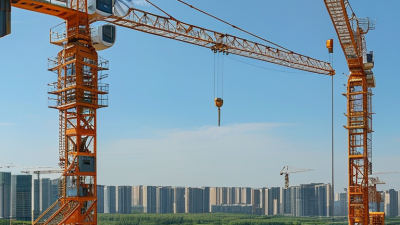
Self-erecting tower cranes suit low- and mid-rise projects where space is tight and repeated lifting is needed. Their compact transport format and built-in erection system can reduce reliance on a separate mobile crane during assembly. Once set up, they can place materials such as formwork, rebar bundles, and roof components across a defined work zone. They are not magic. Ground capacity, wind exposure, reach, and lifting charts still determine whether a model fits the site.
The UN DESA’s 2018 World Urbanization Prospects projected that 68% of the global population would live in urban areas by 2050, pointing to continued pressure for construction on constrained sites. That is context, not a direct forecast for crane demand.
Global Construction Perspectives and Oxford Economics’ Global Construction 2030 report projected construction output would grow 85% from 2015 to 2030, reaching US$15.5 trillion. These broad forecasts do not identify which crane type will win.
Not automatically. For a supplier evaluation, compare load charts at actual working radii, setup requirements, service access, and operator training. A crane that fits on paper may still struggle when a narrow street, soft ground, or nearby structure limits its working area. Recheck those details against the project plan.
Key Criteria for Evaluating Chinese Crane Suppliers
When evaluating a Chinese self-erecting tower crane supplier, ask for model-specific test records, not just a catalogue. Check rated-load charts at different jib lengths, wind limits, foundation requirements, and erection time. Request a video or site reference showing setup on a confined project, with the ground conditions and crew size stated. Small details matter.
Safety documentation deserves close review. The U.S. Bureau of Labor Statistics recorded 1,075 fatal work injuries among construction and extraction workers in 2023; this is not crane-specific, but it underlines the consequences of weak controls. Ask how the supplier verifies structural welds, electrical systems, emergency stops, and overload protection, and whether inspection reports are traceable to the serial number. Then check parts availability, technician response times, and warranty exclusions in writing. Ask for a sample spare-parts list. It is easy to overlook. A certificate alone cannot show how quickly a failed limit switch can be replaced. Compare delivered cost, commissioning support, and local service capacity—not only the quoted crane price. Even careful checks leave uncertainty; independent inspection before shipment is worth considering.
Assessing Safety Features, Technical Support, and Spare Parts
Choosing a self-erecting tower crane supplier in China means checking safety systems, technical support, and spare-parts access—not just lifting capacity. Ask for documented tests of limiters, emergency stops, load-moment protection, and wind alarms. Request clear inspection records and operating instructions in a language your crew understands. A CPWR analysis of U.S. Bureau of Labor Statistics data recorded 632 construction crane fatalities from 2003 to 2010. The figures cover different crane types, but underline why safety verification matters. A certificate alone is not enough.
Technical support should be practical and reachable. Ask how quickly the supplier can provide troubleshooting, remote diagnostics, and a qualified technician when a fault stops work. Check whether manuals include wiring diagrams, fault codes, and step-by-step inspection procedures. A useful test is to ask how the team would respond to a failed limit switch on a rainy site. Vague answers are a warning. A paper promise can still fail under pressure.
For spare parts, request a recommended stock list for wear items and critical components, including motors, sensors, and control relays. Confirm part numbers, dispatch locations, typical lead times, and compatibility across crane configurations. Ask how obsolete parts are handled. Keep written records of response times and supply commitments; they make later reviews less subjective. Supplier claims deserve scrutiny, and even a careful checklist cannot prevent every delay.
Choosing a Self-Erecting Tower Crane Supplier in China
Suggested evaluation weighting for comparing suppliers, focused on safety, technical support, and spare parts.
Safety-related evidence receives the largest suggested share. Verify certifications, inspection and load-test records, support response arrangements, training, and spare-parts availability directly with each supplier. These percentages are an illustrative buyer framework, not market research or supplier-specific performance data.
Choosing a Supplier for Your Project Requirements
Choosing a self-erecting tower crane supplier starts with your site, not the brochure.
Share the lifting plan, maximum working radius, required hook height, ground conditions, and access limits. Ask for a load chart that matches the proposed configuration, plus details on wind limits, power supply, setup space, and dismantling needs. A crane that fits the project on paper may not fit beside a narrow road or under overhead restrictions.
Supplier support matters after delivery.
Check spare-parts availability, technician response times, operator training, and the clarity of inspection and maintenance records. Request references for projects with similar loads and site constraints, then ask what went wrong as well as what went well. No checklist catches everything. A site walk can change your shortlist.
The McKinsey Global Institute’s 2017 report, Reinventing Construction, reported average annual construction labor-productivity growth of about 1% over two decades, compared with 2.8% across the global economy and 3.6% in manufacturing.
This is not a crane-specific benchmark, but it highlights why coordination and avoidable downtime deserve attention.
Compare suppliers on documented service commitments, delivery planning, and practical commissioning support—not price alone. Small details matter. One missed access measurement can delay setup. A careful comparison still involves judgment, so record assumptions and revisit them when site conditions change.