7 Best Mobile Tower Cranes for Global Buyers
Choosing the right mobile tower crane can shape project safety, productivity, and long-term operating costs. Global buyers need more than attractive lifting figures. They must examine transport dimensions, maximum load charts, setup time, wind limits, and service access. A Tower Crane Mobile unit may perform well on a compact urban site, yet struggle where ground conditions change quickly.
This guide reviews seven leading mobile tower cranes for international construction teams. The selection considers practical lifting performance, telescopic mobility, hydraulic erection systems, operator visibility, and manufacturer support. Field experience shows that small details matter. A clear load chart helps. Reliable remote diagnostics help even more. Parts availability can decide whether a crane works tomorrow or remains idle for weeks.
Real sites differ.
The strongest models are not automatically the best choice for every buyer. Local regulations, road transport rules, foundation requirements, and trained operator availability must be checked before purchase. Manufacturer documentation should be compared with independent inspections and feedback from experienced contractors. Some specifications may appear impressive, but real productivity depends on setup conditions and maintenance discipline. That gap matters. This overview aims to provide a balanced starting point, not an unquestionable ranking. Buyers should verify each crane’s certification, warranty coverage, residual value, and regional technical support. A careful decision may take longer, but it can reduce downtime, unexpected adaptation costs, and avoidable safety risks.
What Is a Mobile Tower Crane?
7 Best Mobile Tower Cranes for Global Buyers
What Is a Mobile Tower Crane?
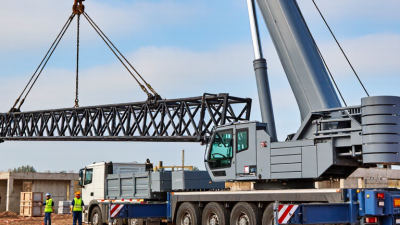
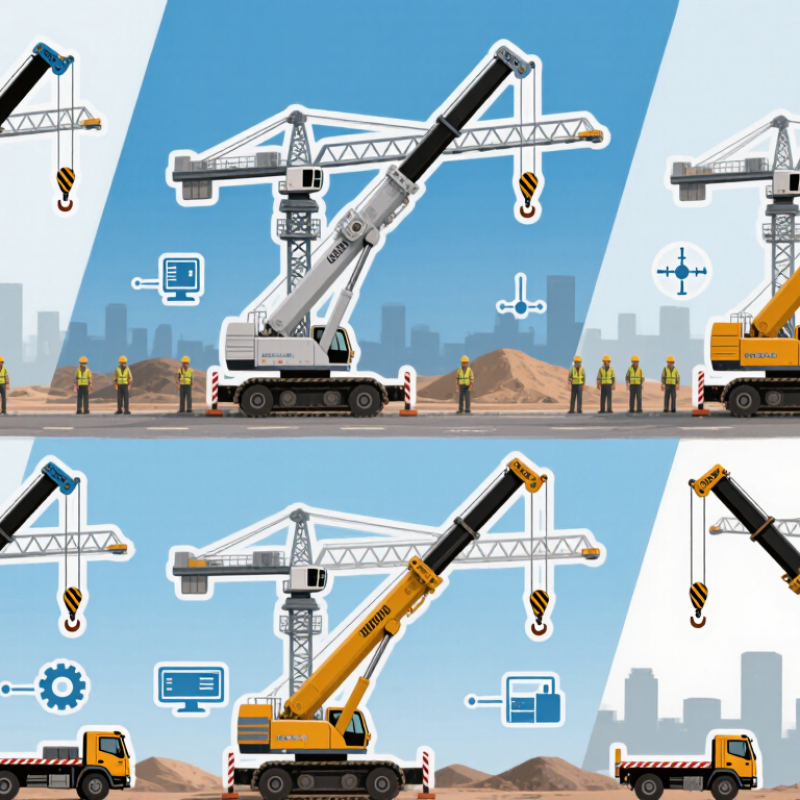
A mobile tower crane combines a tower crane’s height with a mobile crane’s relocation ability. It usually has a wheeled carrier, vertical mast, slewing platform, and horizontal jib. Some models erect themselves hydraulically, while others require limited assistance on site. The crane can move between construction zones, then lift materials above several floors.
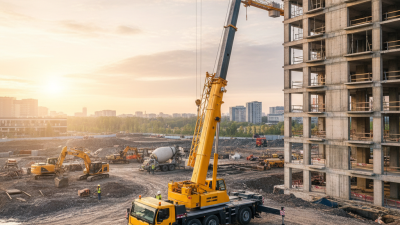
Its design suits urban projects, bridge work, industrial maintenance, and restricted sites. A compact carrier may pass through narrow access points, while the tower provides greater hook height than a standard mobile crane. However, mobility does not mean unlimited road travel. Axle loads, transport dimensions, road approvals, and local lifting regulations still matter.
According to Grand View Research, the global crane market was valued at about USD 36 billion in 2023. The report expects steady growth through 2030, supported by infrastructure and construction investment. Mobile tower cranes represent only part of this market, and published estimates vary because researchers classify equipment differently. That uncertainty deserves attention.
The International Labour Organization reports nearly 2.8 million work-related deaths annually worldwide. Safe crane selection therefore requires more than checking maximum capacity. Buyers should review load charts, wind limits, foundation pressure, emergency systems, operator visibility, and service access. A practical site check is essential. I would also question marketing claims that emphasize “fast setup” without showing ground conditions, counterweight handling, or real erection time.
Performance, Mobility, and Safety Comparison
The seven best mobile tower cranes differ by jobsite, not appearance. Compact city units suit narrow streets and short lifts. All-terrain units travel between uneven sites with stronger road mobility. Rough-terrain versions offer stability on gravel and unfinished ground. Telescopic models reduce setup time through rapid mast extension. Fast-erecting units support repetitive residential work. Hybrid-electric units reduce idle emissions near occupied buildings. High-capacity configurations handle heavier loads but demand larger transport plans.
Performance depends on more than maximum capacity. Check rated load charts at actual working radii. A crane lifting 8 tonnes near its base may lift far less at full reach. Mobility improves when axle loads, turning radius, and ground pressure match the route. Safety deserves stricter attention. The U.S. Bureau of Labor Statistics reported 1,075 fatal work injuries in construction and extraction occupations in 2023. That figure is not crane-specific, but it shows the sector’s exposure. OSHA rules require competent planning, ground assessment, inspections, and operator qualification. Controls can still fail. Human judgment remains essential.
Tips: Compare setup time, wind limits, emergency lowering, and transport width. Ask for independent inspection records, not only sales specifications. ISO 12480-1 offers practical guidance for safe crane operation, while local regulations may impose additional requirements. A useful comparison table should record capacity, working radius, travel speed, erection time, and safety systems. I would not rank one configuration permanently. Soil, wind, traffic, and crew experience can change the result. Sometimes the smaller crane is the safer choice.
7 Best Mobile Tower Cranes for Global Buyers - Performance, Mobility, and Safety Comparison
| Rank |
Representative Crane |
Maximum Capacity
(t) |
Capacity at
Maximum Jib (t) |
Maximum Jib
(m) |
Maximum Hook
Height (m) |
Approx. Setup
Time (min) |
Road Mobility |
Remote
Operation |
Load-Moment
Limiter |
Best-Fit Applications |
Overall
Profile |
| 1 |
Heavy-Duty Mobile Tower Crane A |
8.0 |
1.9 |
45 |
59 |
15–20 |
Self-propelled; road-legal configuration available |
Available |
Standard |
Urban construction, industrial buildings, infrastructure projects |
High capacity |
| 2 |
Long-Reach Mobile Tower Crane B |
8.0 |
1.5 |
65 |
81 |
25–35 |
Self-propelled; special transport may be required |
Available |
Standard |
High-rise construction, large commercial sites, bridge works |
Maximum reach |
| 3 |
Compact Heavy-Lift Crane C |
6.0 |
1.5 |
38 |
51 |
12–18 |
Self-propelled; compact road configuration |
Available |
Standard |
Residential construction, renovation, confined urban sites |
Balanced |
| 4 |
Medium-Reach Mobile Tower Crane D |
6.0 |
1.3 |
45 |
45 |
15–25 |
Self-propelled; standard road transport support |
Optional |
Standard |
General building construction, precast installation, roofing |
Versatile |
| 5 |
All-Terrain Compact Crane E |
4.0 |
1.0 |
40 |
40 |
10–15 |
Self-propelled; strong site-to-site mobility |
Optional |
Standard |
Fast-cycle residential work, retail fit-outs, small infrastructure |
Highly mobile |
| 6 |
Lightweight Mobile Tower Crane F |
2.0 |
0.7 |
28 |
22 |
8–12 |
Compact self-propelled configuration |
Optional |
Standard |
Housebuilding, maintenance, low-rise commercial projects |
Economical |
| 7 |
Extended-Reach Mobile Crane G |
6.0 |
1.0 |
60 |
60 |
20–30 |
Self-propelled; transport planning required |
Available |
Standard |
Large residential developments, logistics facilities, industrial construction |
Long outreach |
Note: Figures represent typical published specifications for comparable mobile tower crane configurations. Actual capacity charts, hook height, transport dimensions, setup time, road regulations, wind limits, and safety equipment vary by configuration, jurisdiction, and site conditions. Final purchasing decisions should be based on the manufacturer's current technical documentation and a project-specific lift plan.
How to Select the Right Crane for Your Market
7 Best Mobile Tower Cranes for Global Buyers
How to Select the Right Crane for Your Market
Selecting a mobile tower crane starts with the jobsite, not the brochure. Review typical load weights, lifting radius, building height, road access, and ground conditions. A crane suited to dense European streets may struggle on rough regional roads. Another may offer excellent height but require costly assembly equipment.
For most markets, compare seven practical factors: maximum load, load chart at working radius, travel dimensions, setup time, wind rating, power system, and service support. Check the full load chart, not only the headline capacity. A crane lifting 8 tonnes near the mast may lift far less at 40 metres. That difference affects real productivity.
Local rules also matter. Confirm certification, transport limits, electrical requirements, and operator training before purchase. Ask whether technicians can reach the site quickly and whether critical parts are stocked locally. Total cost includes fuel, tires, inspections, insurance, and downtime. The cheapest purchase can become expensive after one damaged component. A spreadsheet can still mislead. Field conditions are rarely perfect. Leave safety margins for wind, uneven ground, traffic delays, and changing project demands. Choose a configuration that matches your market’s common work, not an impressive specification used once.