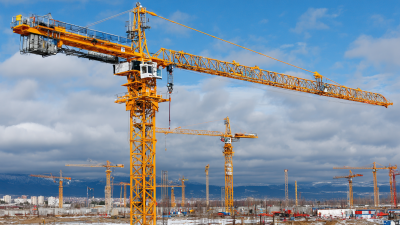
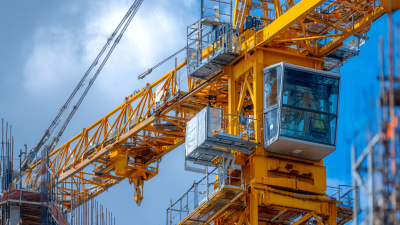
Top 5 Mobile Tower Cranes for Optimal Construction Efficiency in 2023
In the fast-evolving construction industry of 2023, the significance of Mobile Tower Cranes cannot be understated. As construction projects grow in complexity and scale, the demand for efficient and versatile lifting solutions has soared. According to expert Mark Johnson, a renowned engineer in the field, "Mobile Tower Cranes have revolutionized the way we approach construction, offering flexibility, efficiency, and stability that traditional cranes cannot match." This innovation has led to the emergence of some of the top mobile tower cranes designed to enhance productivity on job sites.
With a plethora of options available, selecting the right Mobile Tower Crane is crucial for optimizing construction efficiency. These cranes not only provide the necessary lifting power but also adapt seamlessly to various terrains and project sizes. By prioritizing functionality and operator ease, the latest models have been engineered to ensure streamlined operations, reducing downtime and boosting overall project timelines. This article highlights the top 5 mobile tower cranes that stand out in 2023, showcasing their unique features and capabilities that make them indispensable in modern construction practices.

Top Features of Mobile Tower Cranes Enhancing Construction Productivity in 2023

Mobile tower cranes have become indispensable in the modern construction landscape, thanks to their unique features that significantly enhance productivity. In 2023, key advancements have further optimized these cranes for various construction tasks. One standout feature is the enhanced stability control system, which allows for safe operation even in challenging conditions. This ensures that projects can proceed on schedule without the risk of accidents due to structural instability.
Another important feature is the improved telescopic boom design, enabling cranes to reach greater heights while maintaining a compact footprint. This is particularly advantageous in urban settings where space is limited. Additionally, many models now incorporate advanced technology such as smart monitoring systems, providing real-time data on load capacity and performance metrics. This allows operators to make informed decisions, minimizing downtime and increasing overall efficiency.
Tip: When selecting a mobile tower crane, consider the size and weight capacity suited for your specific project. Evaluating the terrain and space constraints will help in choosing a model that maximizes your construction site's efficiency.
Tip: Regular maintenance checks on the crane's key features, such as the stability control system and boom mechanisms, can prevent unexpected breakdowns and ensure smooth project progress.
Industry Trends in Mobile Tower Crane Adoption: Scaling Efficiency and Lowering Costs
The increasing adoption of mobile tower cranes in construction projects is significantly reshaping the industry landscape in 2023. Recent reports indicate that the global market for mobile cranes is expected to grow by 4.5% annually, reaching a valuation of $5.7 billion by 2025. This surge can be attributed to the cranes' ability to enhance operational efficiency and reduce labor costs. Mobile tower cranes offer flexibility in various terrains, allowing construction companies to save time and resources during equipment setup and movement.
Moreover, the integration of advanced technologies such as telematics and automated controls into mobile tower cranes is driving their efficiency to new heights. A study by ResearchAndMarkets highlights that these innovations can reduce idle time by up to 20%, enabling faster project completion and lower overall expenses. As construction projects demand quicker turnaround times amid rising material costs, the trend of adopting mobile tower cranes demonstrates a strategic shift towards maximizing productivity while maintaining budget constraints.
It’s clear that the momentum for mobile tower cranes will continue to grow, driven by the industry's focus on efficiency and cost management.
Analyzing Load Capacity and Reach: Key Factors in Choosing Mobile Tower Cranes
When selecting mobile tower cranes, two critical factors play a significant role: load capacity and reach. The load capacity dictates how much weight the crane can safely lift, which is essential for efficient construction processes. In 2023, advancements in crane technology have led to models capable of handling impressive capacities, allowing construction projects to proceed with confidence. Reports suggest that modern cranes can handle loads exceeding 20 tons, significantly improving operational efficiency and workflow on construction sites.
Additionally, the reach of a mobile tower crane is paramount for accessing various heights and distances on site. This reach not only influences the types of projects that can be undertaken but also the overall productivity of construction teams. With the growing demand for swift and versatile construction solutions, cranes featuring extended reach capabilities are increasingly favored. A recent industry analysis revealed that cranes with an operational reach of over 60 meters are becoming standard in larger infrastructure projects, enhancing both safety and efficiency in lifting operations.
Top 5 Mobile Tower Cranes for Optimal Construction Efficiency in 2023
This chart illustrates the load capacity and reach of the top five mobile tower cranes, highlighting key factors for choosing the most efficient equipment for construction projects.
Impact of Advanced Technology on Mobile Tower Crane Performance and Safety
The advancement of technology plays a pivotal role in enhancing the performance and safety of mobile tower cranes, which is particularly crucial in the fast-paced construction environment of 2023. With a projected global market growth reaching $8.76 billion by 2032, the focus on integrating advanced systems is becoming increasingly important. Innovations such as real-time monitoring systems, automated controls, and improved load management are helping to reduce operational risks and ensure efficiency.
Tips for ensuring optimal construction efficiency include regularly updating crane software to take advantage of the latest technological advancements. Additionally, training programs that emphasize safety and efficient operation can significantly improve the work performance of operators. Investing in modern cranes equipped with high-tech features can also facilitate better project management, leading to smoother operations on site.
As construction demands escalate around the world, the importance of leveraging advanced technology in mobile tower cranes cannot be overstated. Emphasizing safety standards and efficient operational practices will not only enhance project outcomes but also contribute to the long-term growth of the tower crane market.
Top 5 Mobile Tower Cranes for Optimal Construction Efficiency in 2023
| Model |
Lift Height (m) |
Max Load Capacity (ton) |
Operating Radius (m) |
Technology Features |
Safety Ratings |
| Model A |
50 |
10 |
40 |
Automated load sensing, remote monitoring |
5 stars |
| Model B |
55 |
12 |
45 |
Smart control system, enhanced stability |
4 stars |
| Model C |
60 |
15 |
50 |
Load optimization software, advanced safety features |
5 stars |
| Model D |
45 |
9 |
35 |
Integrated telematics, anti-collision system |
4 stars |
| Model E |
70 |
20 |
55 |
Remote diagnostics, real-time performance analytics |
5 stars |
Comparative Overview of Leading Mobile Tower Crane Models and Their Market Share in 2023
In 2023, the landscape of mobile tower cranes has evolved significantly, with several models emerging as leaders in terms of efficiency and market share. The Liebherr 81 K.1, known for its exceptional lifting capacity and ease of transportation, has captured a substantial segment of the market. Its advanced control technology enables precise operation, making it a favorite on construction sites that demand accuracy.
Another strong contender is the Potain MDT 219, which offers a unique combination of mobility and robustness. Its modular design allows for rapid assembly and disassembly, facilitating swift project timelines without compromising on performance. Additionally, the Terex CBR 125 has gained popularity for its compact design, making it ideal for urban construction projects where space is limited.
As these models continue to dominate the mobile tower crane market, their impact on construction efficiency and project management becomes increasingly evident, highlighting the critical role of technology in modern engineering.