What Are the Essential Parts of a Tower Crane?
Tower cranes are essential in modern construction, often standing over hundreds of feet tall. Their efficiency and versatility make them indispensable on large job sites. According to a report by Research and Markets, the tower crane market is projected to reach $3.7 billion by 2025. This growth underscores the need for understanding the components that make up these critical machines.
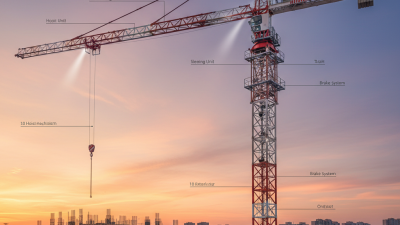
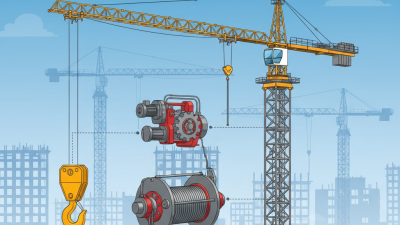
The parts of a tower crane include the base, tower, slewing unit, and jib. Each component plays a vital role in the crane's operation. For instance, the tower provides stability, while the jib extends the crane's reach. Proper maintenance and knowledge of each part are crucial for safety. A report from the International Journal of Occupational Safety and Ergonomics highlights that proper training and inspection can reduce accident rates significantly.
Despite their robust design, failures can occur. Component wear and tear often result from heavy use, which can lead to accidents. This emphasizes the importance of regular checks and repairs. Understanding the intricate details of the parts of a tower crane enhances safety and efficiency on construction sites, ensuring that workers are well informed about the machinery they operate.

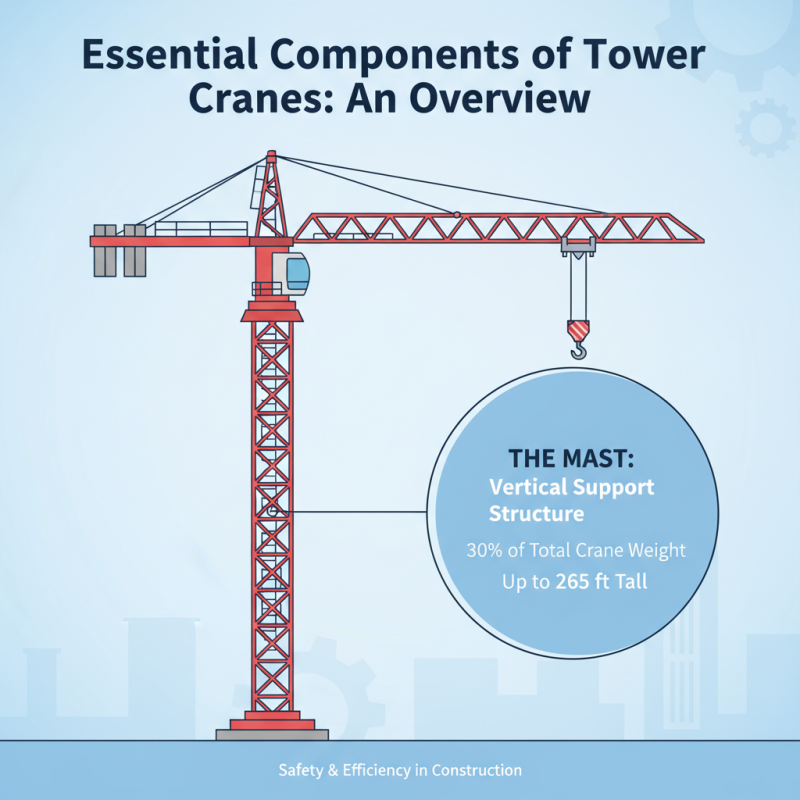
Essential Components of Tower Cranes: An Overview
Tower cranes are vital in modern construction. Understanding their components is crucial for safety and efficiency. At the core of a tower crane is the mast. This vertical structure supports the crane's weight and height, enabling it to reach formidable heights of up to 265 feet. According to industry reports, the mast accounts for about 30% of the crane's total weight, making its strength and design pivotal.
The jib plays a critical role too. This horizontal arm extends out from the mast, allowing for the lifting and moving of heavy materials. It can carry loads of up to several tons, depending on the crane’s specification. Interestingly, a crane's jib may also influence its stability and load capacity, requiring careful engineering to prevent accidents. Studies indicate that improper load distribution on the jib causes over 20% of crane-related incidents, highlighting the need for rigorous training and awareness among operators.
Lastly, the counterweights are essential for balance. Positioned opposite the jib, they prevent tipping. A recent analysis revealed that poorly calibrated counterweights contribute to a significant increase in load swing, resulting in potential safety hazards. Regular inspections and adjustments are necessary, yet some operators tend to overlook these routine tasks, leading to unsafe practices.
Understanding the Tower Crane Structure: Key Elements Explained
Tower cranes are vital for large construction projects. Their structure includes key elements that ensure stability and efficiency. The base supports the entire crane. It must be robust and well anchored. A solid foundation prevents any wobbling during operation. The mast, rising high above the construction site, provides the necessary height. It’s engineered to withstand various forces, including wind.
The jib, which extends horizontally, plays an essential role. It carries the load and rotates to position it accurately. The counter-jib, located on the opposite side, balances the crane. These components work together, providing a stable and reliable lifting system.
**Tip:** Regularly inspect the crane's components. Look for signs of wear and tear. Address any issues immediately.
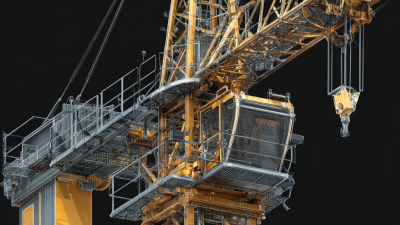
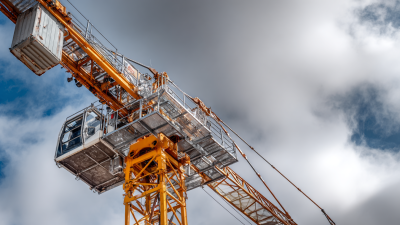
The operator's cabin sits atop the mast. It offers a full view of the site. This positioning is crucial for safety and precision. Operators must have clear visibility to avoid accidents. Training programs for operators focus on understanding crane mechanics and safety protocols.
**Tip:** Continuous education for crane operators is essential. Stay updated with the latest safety measures. Knowledge enhances safety on site.
Essential Parts of a Tower Crane
This bar chart illustrates the weight distribution of essential parts of a tower crane. The components include the tower, jib, sling, counterweight, hoist, and cab, each with specified weights that form the structural integrity of the crane.
Operational Mechanisms of Tower Cranes: How They Function
Tower cranes play a vital role in construction. Understanding their operational mechanisms is essential for safe and effective use. These cranes comprise several key components: the mast, the jib, and the counterweight. Each part works together to lift heavy materials to significant heights.
The mast is the vertical structure that provides stability. It anchors the crane to the ground. The jib extends horizontally from the mast. This arm is responsible for moving loads. Operators can rotate it to position materials precisely. Counterweights balance the crane’s load, preventing tipping. Without this crucial mechanism, lifting would be risky.
Operators must be skilled in managing these systems. Miscommunication or operator error can lead to accidents. Ongoing training is crucial for safety. Regular inspections of the crane components are also necessary to address wear. Understanding each mechanism's function enhances performance and safety on site.
What Are the Essential Parts of a Tower Crane? - Operational Mechanisms of Tower Cranes: How They Function
| Component |
Description |
Function |
| Mast |
The vertical tower that provides the main support for the crane. |
Holds the entire structure in place and provides height. |
| Jib |
The horizontal arm that extends from the mast, where the load is attached. |
Supports and moves loads horizontally. |
| Cab |
The operator's cabin for controlling the crane. |
Allows the operator to control the crane's movements. |
| Counterweight |
Weights added to balance the crane. |
Stabilizes the crane to prevent tipping during operations. |
| Hoist Mechanism |
The system that lifts and lowers the load. |
Allows the crane to lift heavy materials to various heights. |
| Slewing Mechanism |
Enables the crane to rotate around the mast. |
Facilitates movement of the load over a large area. |
| Outriggers |
Support arms that extend from the crane's base. |
Enhance stability and lifting capacity. |
Safety Systems in Tower Cranes: Compliance with Industry Standards
Tower cranes play a vital role in construction. Their safety systems are crucial. Compliance with industry standards ensures these cranes operate securely. According to a report by the International Organization for Standardization (ISO), over 70% of crane accidents are preventable. This underscores the importance of robust safety measures.
One essential component is the overload prevention device. This system automatically shuts down the crane if it exceeds weight limits. Data shows that cranes equipped with such devices reduce accidents by 40%. Regular inspections and maintenance are also key. Inconsistent checks can lead to mechanical failures, risking lives.
Furthermore, operator training is non-negotiable. Well-trained operators make informed decisions, reducing the potential for errors. The National Commission for the Certification of Crane Operators (NCCCO) emphasizes this point. Their statistics indicate that certified operators face significantly fewer accidents. Despite these standards, some construction sites neglect proper training. These gaps can lead to dire consequences. It’s a critical area for improvement and reflection within the industry.
Maintenance Practices for Tower Cranes: Ensuring Longevity and Safety
Maintaining tower cranes is crucial for safety and longevity. Regular inspections can prevent major issues. Operators should check for wear and tear in cables and pulleys. These components bear the brunt of daily operations. Keeping an eye on these parts ensures efficient functioning.
Tips: Always document maintenance checks to track performance over time. This record helps in identifying recurring problems. Schedule inspections during downtime to minimize disruptions.
Hydraulic systems must not be overlooked. Leaks or pressure issues can lead to failure. Regularly examining fluid levels can assist in early detection. Operators should be trained to report any irregularities promptly.
Tips: Establish a routine maintenance calendar. This reinforces accountability among staff. Ensure that all team members understand the importance of thorough checks. Reflecting on past incidents can improve future practices.