How to Choose the Right Mobile Tower Crane?
Choosing a Mobile Tower Crane is not just a matter of comparing maximum lifting capacity. The right machine must suit the site, the work sequence, and the loads handled each day. A compact urban project may need a small footprint and controlled slewing, while a larger build may demand greater reach and lifting capacity. These differences matter.
Before reviewing models, identify the heaviest load, its working radius, required hook height, available ground area, and expected operating hours. Check the manufacturer’s load charts at the actual radius, not only the headline capacity. Consider power supply, transport dimensions, setup requirements, wind limits, and access for service technicians. Small details count. A crane that fits the plot on paper may still obstruct deliveries or clash with nearby structures.
Reliable selection also depends on site conditions and competent advice. Ask suppliers for technical documents, installation requirements, maintenance plans, and references for comparable projects. Confirm that the proposed configuration matches the ground assessment and the project’s lifting plan. If requirements are uncertain, pause and verify them with qualified crane professionals. That takes time. It is usually cheaper than discovering a mismatch after delivery. No single specification makes a crane suitable for every job, and early estimates can be wrong. This guide explains how to compare key factors, ask useful questions, and choose equipment that supports safe, efficient work without paying for capacity the project will not use.
What Is a Mobile Tower Crane and How Does It Work?
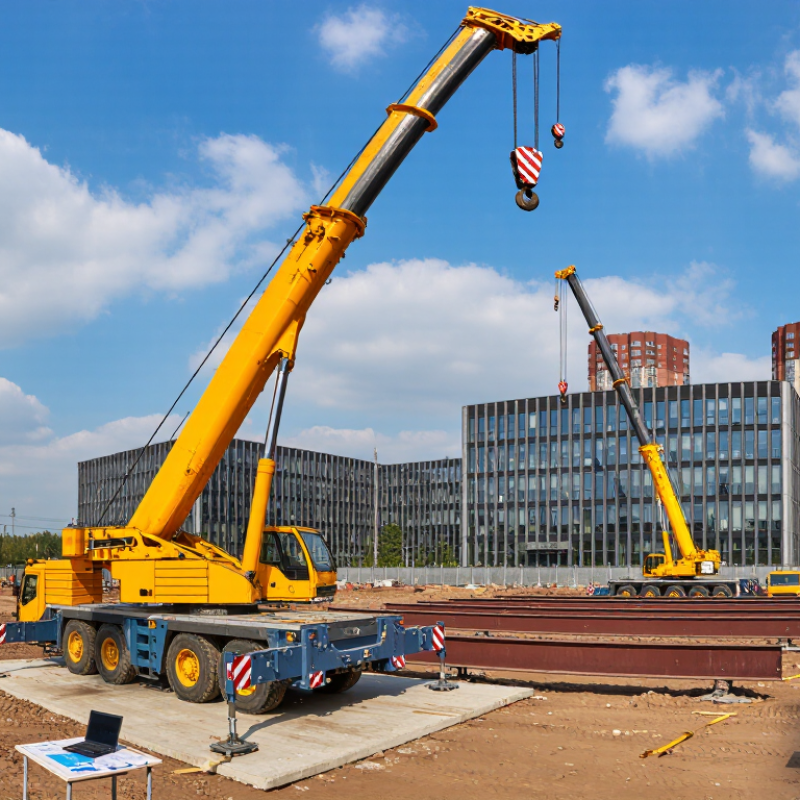
A mobile tower crane combines a tower crane’s height and jib reach with a carrier designed for transport between sites. Once positioned, its support legs are extended and leveled, then the mast and jib are raised. Some models erect themselves hydraulically; others need separate assembly. The exact sequence depends on the crane design. Check the manufacturer’s operating instructions.
During a lift, a hoist raises or lowers the load along the jib. A slewing unit turns the jib, while a trolley may move the load closer to or farther from the mast. Counterweights help balance the crane, but they do not make every lift safe. Operators must compare the load’s weight and working radius with the crane’s load chart. Ground strength, setup space, and overhead obstacles matter, too. That distinction matters. A crane may reach the required height yet lack capacity at the needed radius.
Tips: Before choosing a model, map the heaviest load and its full travel path. Confirm the setup area can support the crane and its stabilizers. Wind can change lifting conditions quickly. A neat site plan can still miss a drain cover or soft patch; inspect the actual ground, and reassess when conditions change.
Which Lifting Requirements Should You Define First?
Before comparing mobile tower cranes, define the heaviest load and its full lifting setup. Include the hook block, slings, spreader beams, and any other lifting gear in the total weight. A pallet may look light until its packaging and attachments are counted. Small details matter.
Next, measure the working radius from the crane’s center of rotation to each pickup and landing point. Record the required hook height, boom or jib configuration, and the highest obstruction along the route. Crane capacity changes with configuration and radius, so the headline maximum load is not enough. Check the relevant load chart for the exact setup. If a load must travel around a building corner, note that too; it is easy to overlook.
Describe the site and schedule as carefully as the load. Confirm access width, setup space, ground conditions, and whether the crane can operate near overhead obstacles. Ask a qualified lifting professional to assess ground support and the planned lift. Wind limits and operating conditions should follow the crane’s instructions and the lift plan. My own first estimates have missed awkward unloading angles, so leave room to verify measurements on site. A clear requirement list makes crane selection safer and more realistic.
How Do Capacity, Height, and Reach Affect Crane Selection?
Choose a mobile tower crane from its load chart, not its headline capacity. The chart’s allowable load changes with working radius, tower configuration, and support setup. OSHA’s construction-crane requirements call for operators to follow rated-capacity information for the crane’s actual configuration. A 2.4-tonne panel lifted 18 metres from the mast may exceed the chart limit, even when the crane’s maximum rating looks ample. Include slings, spreader beams, and other lifting gear in the total. Small details matter.
Height and reach shape the jobsite fit. Measure hook height above the landing point, then allow room for the load, rigging, and safe clearance beneath roofs or services. For reach, measure horizontally from the crane’s slewing centre to the farthest pick—not from the site boundary. CPWR’s analysis of U.S. fatality records counted 632 crane-related construction deaths from 2003 to 2008; the figure is a reminder that setup and planning deserve careful checks. A longer reach can sharply reduce usable capacity. I would compare the heaviest load at its farthest radius against the configuration-specific chart, then confirm ground support and site access with a qualified lift planner. Plans change. Recheck the measurements.
How to Choose the Right Mobile Tower Crane? — How Do Capacity, Height, and Reach Affect Crane Selection?
| Typical Project |
Indicative Maximum Capacity |
Indicative Capacity at Long Reach |
Typical Hook Height |
Typical Working Radius |
Selection Consideration |
| Small residential build or renovation |
About 4–6 tonnes |
About 0.8–1.5 tonnes at a 25–35 m radius |
About 18–30 m |
About 25–35 m |
Useful where access and setup space are limited. Check that the crane can place the heaviest load at its actual working radius, not only near the mast. |
| Low- to mid-rise urban construction |
About 6–12 tonnes |
About 1–2.5 tonnes at a 30–45 m radius |
About 25–40 m |
About 30–45 m |
Balance reach with the load chart and available setup area. Confirm that the jib can cover the work zone without crossing restricted areas. |
| Mid- to high-rise construction with heavier materials |
About 10–20 tonnes |
About 1.5–4 tonnes at a 35–55 m radius |
About 35–55 m |
About 35–55 m |
Prioritize the required capacity at the farthest pick-and-place point. Building height, hook travel, and any later height increase should be assessed together. |
| Large site requiring broad coverage |
About 16–25 tonnes |
About 2–5 tonnes at a 45–60 m radius |
About 40–60 m |
About 45–60 m |
A longer reach can cover more of the site, but lifting capacity generally decreases as radius increases. Check the load chart for the exact configuration. |
| Restricted or congested site |
Project-specific; commonly about 4–12 tonnes |
Depends on the required radius and crane configuration |
Set by building height and clearance needs |
Set by site boundaries and lift locations |
Verify transport access, ground-bearing capacity, stabilizer or support requirements, overhead obstructions, and permitted operating zones before selection. |
| Important: Figures are indicative planning ranges, not certified ratings. Actual capacity, hook height, and radius vary by crane model, jib configuration, reeving, counterweight, support arrangement, wind conditions, and operating limits. Use the crane’s manufacturer load chart and a qualified lift plan to confirm suitability for each lift. |
What Site Conditions and Mobility Needs Should You Assess?
Start with the ground, not the crane’s brochure. Walk the full setup area and travel route, noting soft fill, slopes, trench edges, overhead lines, and buried utilities. Rain can turn compacted soil into a weak surface. Ask a qualified engineer to verify ground-bearing capacity against the crane’s outrigger or support loads; paving slabs alone are not proof of adequate support. OSHA’s 29 CFR 1926.1402 also requires ground conditions to support the crane and its supporting materials.
Measure the tightest gate, turning space, travel distance, and available setup footprint. A mobile tower crane may reduce repeated assembly, but only if its transport configuration can reach the work zone. Check its load chart at the planned radius and configuration, then account for obstacles, wind exposure, and the space needed to lift and slew safely. Small details matter.
Treat mobility as a site-specific trade-off, not a shortcut. CPWR’s analysis of U.S. Bureau of Labor Statistics data counted 297 construction crane-related deaths from 2011 through 2017, about 42 per year. The figure covers construction cranes broadly, not mobile tower cranes alone, but it underlines why route planning and setup deserve careful review. Recheck conditions after heavy rain or site changes. In practice, the first route plan is often imperfect. Use it as a draft, then verify it on site with the operator and lift planner.
How to Choose the Right Mobile Tower Crane?
Assess wind exposure alongside ground capacity, access routes, setup space, and lifting requirements.
Wind pressure rises with the square of wind speed. The values shown are calculated using
q = ½ρv², with air density assumed to be 1.225 kg/m³. They illustrate how exposed
site conditions can affect crane planning; they are not crane operating limits. Check the
crane manufacturer’s specifications and assess whether the crane can safely reach and set up
on the site, including route width, overhead clearance, ground bearing capacity, and available
setup area.
Which Safety, Setup, and Service Factors Should You Verify?
A mobile tower crane should suit the worksite, not just the lifting schedule. Check its load chart against the heaviest load, lifting radius, and planned working height. A pallet that is safe near the mast may exceed capacity farther out. Confirm wind limits, emergency-stop functions, limit switches, and clear access to the operating area. Ask to see current inspection records and the operator’s training documentation. Small details matter.
Setup conditions deserve a site-level check. Look for firm, level ground, and confirm its bearing capacity with a qualified site professional. Review the required base, ballast, and support arrangement against the crane’s instructions. Mark underground services before positioning the machine. Allow space for delivery, assembly, and eventual removal; a narrow gate can turn an easy setup into a costly delay. Take photos of the ground and access route. They help, though they cannot replace a proper assessment.
Service support affects both safety and uptime. Ask who performs scheduled inspections, how quickly faults are assessed, and whether critical replacement parts are available. Request a sample maintenance log, not just a verbal assurance. Check how defects are reported and whether the crane is taken out of service when required. Be candid about uncertainty: site conditions can change after rain, and yesterday’s assessment may no longer be enough. Plan to recheck.