How to Choose the Right Liebherr Tower Crane for Your Project?
Choosing the right Liebherr Tower Crane for your project is crucial for success. These cranes are renowned for their efficiency and durability. However, selecting the correct model can be challenging. Every project has unique requirements, and a one-size-fits-all approach rarely works.
When considering a Liebherr Tower Crane, analyze your project's scale and complexity. The lifting capacity, height, and reach of the crane are essential factors. Assess the site conditions, such as space and ground stability. Each factor influences the crane's performance.
It's important to reflect on past experiences with similar machinery. Mistakes made in previous projects should guide your decision-making. Consider consulting with experts to ensure the best fit for your needs. A well-chosen Liebherr Tower Crane can lead to improved productivity and safety on the job site.
Understanding the Basics of Liebherr Tower Cranes
When choosing a Liebherr tower crane, understanding its basic features is essential. Tower cranes are pivotal on construction sites. They can lift heavy materials and maneuver in tight spaces. Familiarity with the different types and sizes can prevent costly mistakes.
Liebherr tower cranes vary in height and lifting capacity. Some models excel in urban environments, while others are tailored for large projects. Operators should consider the load charts carefully. Did you know that the crane's effectiveness greatly depends on its setup? Ground conditions, wind loads, and proximity to structures matter significantly.
Working with a reliable supplier ensures you can access the right information. Technical documentation is often complex, but it's essential. Misinterpreting it could lead to safety issues. Understanding the specifications allows for better project planning. There are challenges, such as navigating local regulations. It's crucial to be prepared for unexpected conditions. Furthermore, continuous training for operators enhances safety and efficiency.
Evaluating Project Requirements and Specifications
When it comes to selecting the right tower crane for a project, understanding the project requirements is key. The project's size and type dictate the necessary lifting capacity. For instance, a small residential building may not need a crane with high capacity. In contrast, a large commercial site will require robust lifting capabilities. Assessing the maximum load is vital. Consider how heavy materials will be on-site.
Additionally, evaluate the site conditions. Is the ground stable? Are there height restrictions? Surrounding structures play a role too. A crane that extends too far may pose a risk. It's crucial to balance the crane's reach with safety measures. Also, think about access routes for the crane. Tight spaces might limit choices.
Lastly, don't overlook the duration of the project. Some cranes are suited for short-term jobs, while others are better for long-term usage. Understanding the project timeline will influence your decision. Reflect on these aspects carefully. Each project presents unique challenges and opportunities. Balancing all these factors requires deep insight and thoughtful planning.
Comparing Different Models and Their Load Capacities
When selecting a Liebherr tower crane, load capacity becomes a crucial factor. Various models cater to different project needs, from residential buildings to large-scale industrial sites. Each crane model has unique specifications that determine how much weight it can safely lift and move. Familiarizing yourself with these variations is essential for project success.
For instance, some models are designed for lighter loads, typically around 2 to 4 tons. These cranes can be ideal for smaller construction sites or renovation projects. Conversely, heavier models can handle loads exceeding 12 tons, making them suitable for skyscrapers or complex structures. Evaluating your project's requirements helps narrow down the options effectively.
It's also important to consider the crane's reach. A crane with a higher load capacity may not be the best choice if it cannot extend far enough. Understanding the terrain and workspace is vital. Construction challenges may arise if the crane cannot maneuver effectively. Conducting thorough research before finalizing your choice will save time and resources. While specifications are critical, project managers should be wary of underestimating their needs. Collaborating with experts can provide deeper insights into selecting the right crane model.
How to Choose the Right Tower Crane for Your Project? - Comparing Different Models and Their Load Capacities
| Model |
Max Load Capacity (ton) |
Max Height (m) |
Jib Length (m) |
Operating Radius (m) |
| Model A |
10 |
50 |
45 |
30 |
| Model B |
16 |
55 |
50 |
35 |
| Model C |
20 |
60 |
60 |
40 |
| Model D |
25 |
65 |
70 |
45 |
Assessing Site Conditions for Optimal Crane Performance
When selecting a Liebherr tower crane for a construction project, site conditions play a critical role. The terrain, soil quality, and spatial constraints must be assessed thoroughly. According to the Tower Cranes Market Report, 68% of crane failures arise from improper site evaluations. This statistic stresses the importance of understanding environmental factors impacting crane performance.
Analyzing soil characteristics is key. For example, soft soil may require additional support systems. A study by the Construction Industry Research Board indicates that cranes operating on inadequate foundations have a failure rate of over 50%. Evaluating wind patterns and building height is equally significant. The crane must be able to handle the specific stresses caused by its surroundings.
Implementing thorough site analysis can be challenging. Many engineers overlook minor details that lead to substantial issues. It's vital to ensure that all elements, including nearby structures or overhead obstacles, are accounted for. This diligence can prevent costly delays and unsafe conditions. Adopting a conscientious approach to site conditions will enhance overall crane performance and project efficiency.
How to Choose the Right Liebherr Tower Crane for Your Project?
This bar chart illustrates key performance metrics for selecting the appropriate tower crane for construction projects. The data includes lift capacity, maximum height, maximum radius, setup time, and operating range, which are essential in assessing site conditions for optimal crane performance.
Budgeting and Cost Considerations for Your Crane Selection
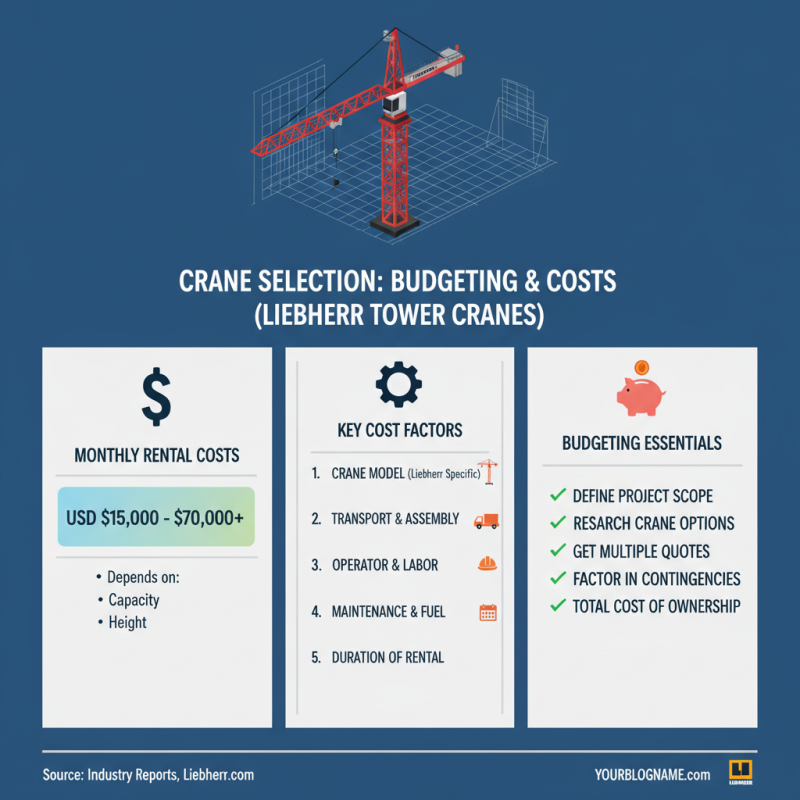
Choosing the right Liebherr tower crane for your project involves careful budgeting and cost considerations. According to industry reports, crane rental costs can range from $15,000 to $70,000 per month. This variation largely depends on the crane’s capacity and height. It’s crucial to establish a clear budget.
When assessing costs, factor in the crane's operational efficiency and maintenance needs. A high-quality crane may have a higher upfront cost but lower maintenance expenses. This can lead to savings over time. Data shows that 20% of total budget overruns in construction projects stem from equipment-related issues.
**Tip:** Evaluate the total cost of ownership, not just the rental price. Include transportation and setup costs in your calculations.
Don’t ignore the indirect costs associated with tower cranes. Training personnel to operate the crane can increase initial expenses. Yet, trained operators can enhance safety and productivity, thus offsetting these costs. Reports indicate that proper training can reduce operational errors by up to 30%.
**Tip:** Invest in operator training to improve safety and efficiency. This may save more money in the long run.
Balancing initial costs with long-term savings is essential. Often, taking additional time to reassess your budget can lead to a more efficient allocation of resources. Ultimately, understanding your project's specific needs ensures you make informed decisions without compromising your budget.